

January Video of the Month

Timeless Presentations from Erickson Foundation Events
This ongoing series highlights keynotes, workshops, and dialogues from past Erickson Foundation conferences - showcasing the most influential voices in psychotherapy. These archival recordings offer more than historical interest; they hold lasting clinical value. Each session distills complex therapeutic ideas into discussions, examples, practical applications, and subtle demonstrations of the art of therapy.
This month’s selection is…
“Rogers, Kohut, and Erickson: A Personal Perspective on Some Similarities and Differences”
Invited Address + Discussion | Evolution of Psychotherapy Conference 1985 | Phoenix, AZ
Faculty: Carl Rogers, Ph.D., Ruth Sanford, M.A., and Miriam Polster, Ph.D.
Moderator: F. Theodore Reid, Jr., M.D.
🌟 Honoring Carl Rogers
January marks the birth month of Carl Rogers (born January 8, 1902).
In this wide-ranging 1985 invited address, Rogers and the rest of the panel reflect on the central ideas of his work. Rogers also compares his ideas with two other major innovators: psychoanalyst Heinz Kohut and psychiatrist Milton H. Erickson.
📌 About the Panel
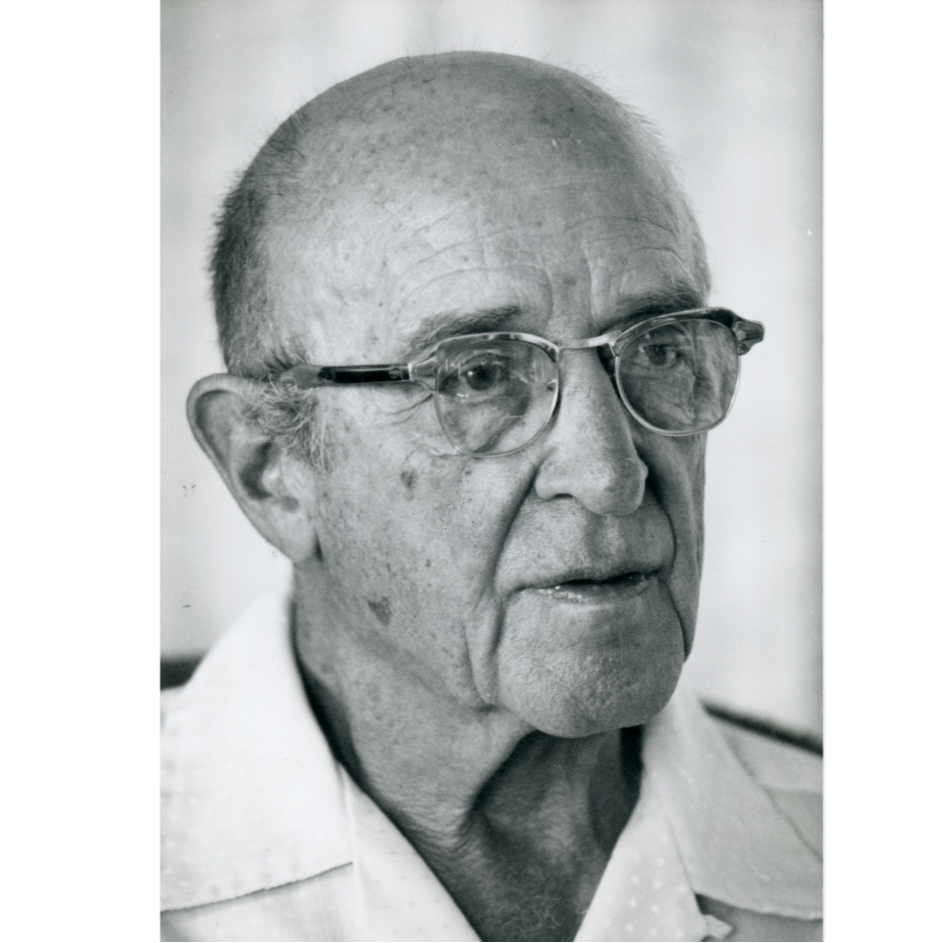
Carl Rogers, Ph.D. (1902–1987): Rogers is widely regarded as one of the most influential figures in 20th-century psychology and is best known for developing the person-centered approach to psychotherapy, which emphasized empathy, authenticity, and unconditional positive regard as the foundation for therapeutic change.
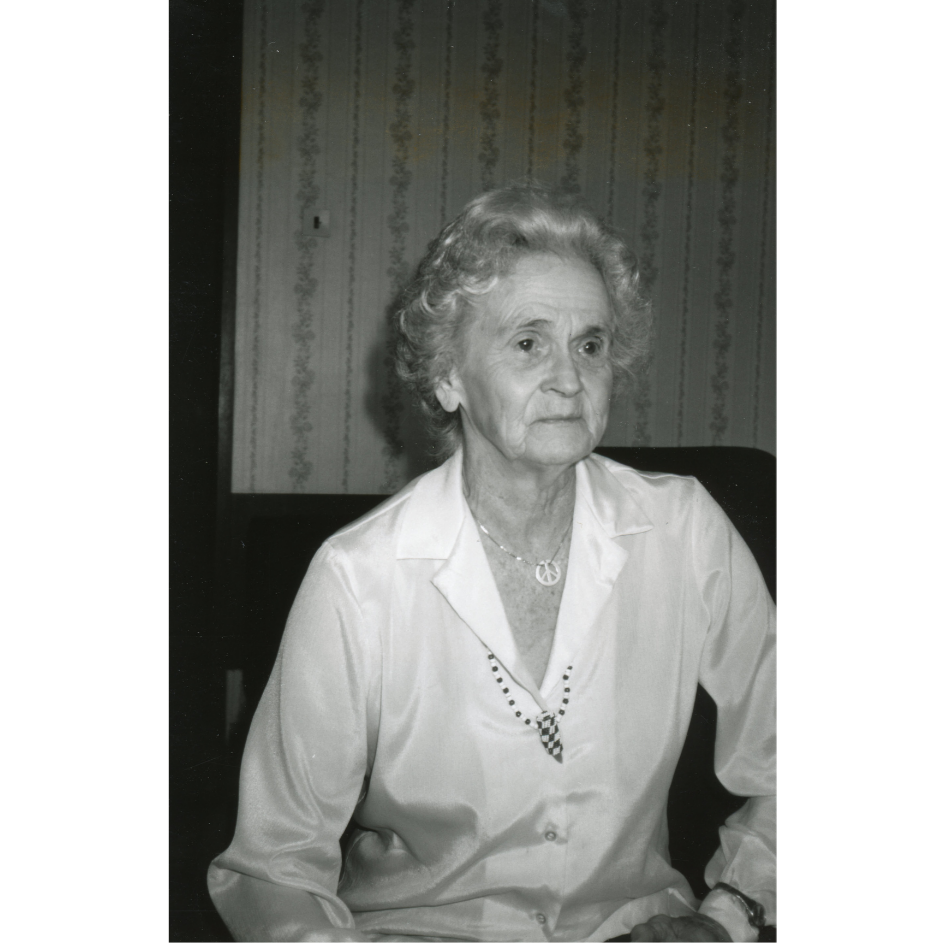
Ruth Sanford, M.A. (1906-2001): Sanford was a longtime collaborator with Rogers and played a central role in expanding the application of person-centered principles to group settings, education, and international conflict work.
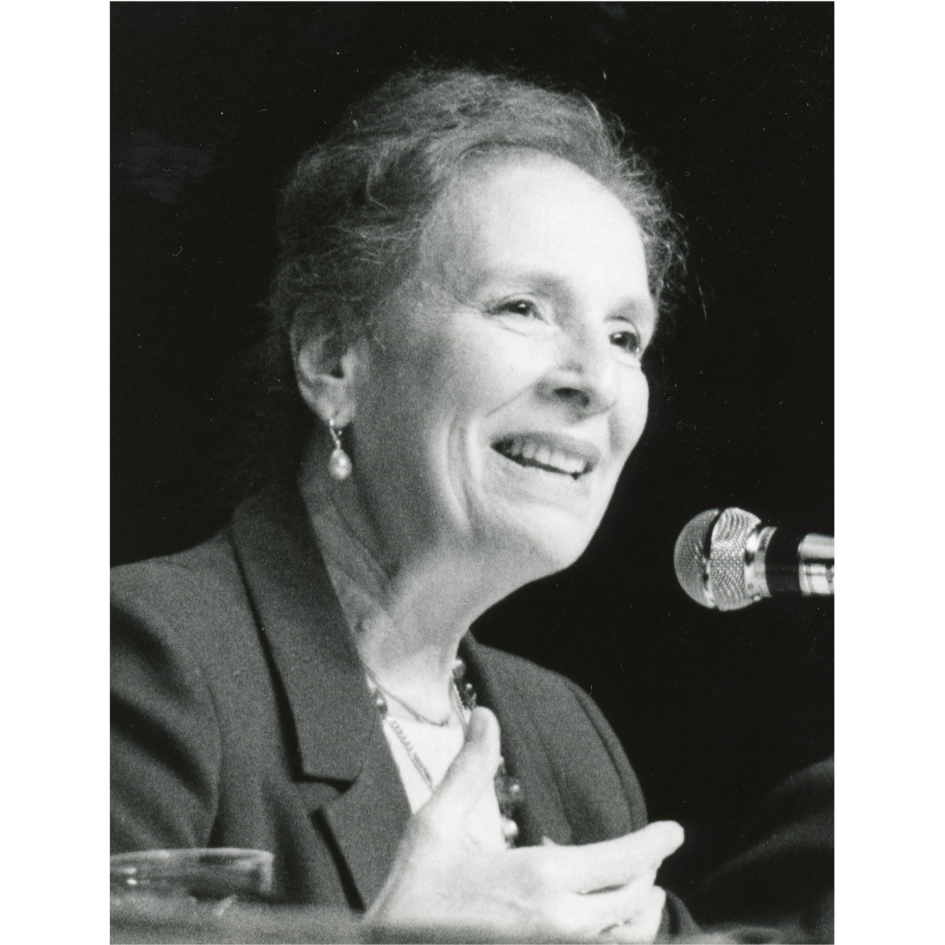
Miriam Polster, Ph.D. (1924-2001): Polster was a key figure in Gestalt therapy, best known for co-authoring Gestalt Therapy Integrated and for her contributions to experiential teaching methods that emphasized immediacy, attention, and relational depth in clinical practice.
Some key figures discussed:
• Heinz Kohut, M.D. (1913–1981): Founder of Self Psychology, known for emphasizing empathic attunement and the development of the self.
• Milton H. Erickson, M.D. (1901–1980): The pioneering psychiatrist whose work reshaped clinical hypnosis and strategic psychotherapy through utilization, indirect influence, and deep respect for unconscious resources.
🧠 Session Highlights
Sanford on the Evolution of the Approach
Ruth Sanford traces how Rogers’ person-centered approach developed. In its early years, it was often taken as a method. Some practitioners of the approach focused on specific therapist behaviors, like using reflective responses or avoiding direction. Sanford explains that the deeper purpose of the work became clearer as time went on. She then states that for her the approach rests on the therapist’s presence and openness, rather than on any technique.
She also discusses Rogers’ early phrase “unconditional love,” which was later refined to “unconditional positive regard.” She describes this as fully accepting the person, even when the therapist does not share their values or agree with their actions.
Rogers on Human Nature
Rogers focuses on a core idea that has often been challenged. He believes that when people feel safe enough to explore honestly, they tend to move in positive directions. He contrasts this with views that assume people are dangerous or destructive at their core. In his clinical work, he saw something different. When the conditions were right, most people moved toward growth and deeper connection.
Empathy as a Central Process
Rogers then talks about empathy, which he defines as entering the client’s world and staying with their experience as it shifts. He sees empathy as part of the actual change process. While he respects Heinz Kohut’s emphasis on attunement, he disagrees with using empathy mainly as a tool to gather data before offering an explanation.
On Intuition in Therapy
Rogers also reflects on the therapist’s presence. He describes moments during sessions when he feels most connected to his intuitive self. These are times when something meaningful happens in the session without much effort or planning. He finds that these types of spontaneous happenings often help more than anything he could deliberately try to do.
A Few Words on Erickson
He closes this portion of the discussion with a brief reflection on Milton Erickson. He praises Erickson’s ability to work with unconscious processes and to follow his intuitive sense of timing. Rogers warns that simply imitating Erickson’s style without understanding the foundation behind it can lead to problems.
🌍 Extending Therapeutic Principles Beyond the Therapy Room
During the second half of the recording, Rogers turns to the work that takes place in groups rather than in individual therapy. Rogers describes bringing what he calls “facilitative principles” into group settings, including cross-cultural workshops, interracial dialogue groups, and meetings that gathered people in active conflict. He points to work he did in Northern Ireland, South Africa, and Central America. Rogers is careful not to oversell the results. “In no case have there been miracles,” he says, but he does describe real shifts including reduced bitterness, clearer communication, and constructive steps that emerged after the workshops.
🎥 Watch the Moment: “One Partial Truth” About Group Life
In this segment, Rogers describes why he continues to test “facilitative principles” in groups. He is searching for what can be learned from any setting where people manage to live together with care, support the full development of each person, and tolerate difference without collapsing into conformity.
📚 Panel Closing
Miriam Polster echoes the other panelists’ sentiments to the audience: that the most important part of the work is often the quality of contact between therapist and client, and that does not reduce easily to technique.
She frames the theme of the conference that day as an ongoing pull between method and humanity. She argues that real mastery often means “paring away the non-essentials.” To make her point, she turns to Picasso as an example. With enough skill, an artist can leave out what is unnecessary and still convey what is true.
Polster uses this idea of “earned simplicity” to define mastery. She describes it as disciplined minimalism, backed by deep skill. She emphasizes that this simplicity means seeing the person clearly, without over-managing the moment, and meeting them with a steady regard. She closes with a line that captures that spirit: “Love is not blind; it’s generous.”
💬 Discussion Highlights

During the Q&A session after the panel, an audience member asks Rogers to speak on the “collected unconscious”. Rogers does not adopt the term and instead he describes a closely related principle: trust in the “wisdom of the group” and in what can emerge when people are given the room to discover what they want to express or accomplish during a gathering.
He illustrates this by referring to a recent four-day workshop in Rust, Austria, held as part of what became known as the Vienna Peace Project and focused on “The Central American Challenge,” an invitation-based meeting that brought together political and professional leaders from roughly seventeen countries. Participants were not accustomed to open-ended process and were initially uneasy about the absence of a set agenda. Rogers describes the first two days as highly intellectual, with participants delivering formal speeches. Rather than forcing a shift, he “sat tight” in his trust that the group would recognize it wanted something different. Near the end of day two they did, and the tone changed dramatically. By the next morning, the workshop had moved into a far more direct and engaged group process.
One audience member challenges Rogers’ optimistic view of human nature and cautions that not all groups, or individuals, shift in the way the Austria workshop did. The question raises the reality of violence and “evil” in history and clinical work. Rogers acknowledges destructive behavior and the ways people can be shaped by damaging environments, but he rejects “original sin” as an inherent human core. His stance remains that under conditions of safety, respect, and understanding, people tend to move toward greater socialization, harmony, and connection.
⏳ Why It Still Matters
This recording captures Carl Rogers speaking near the end of his career, reflecting on how he practiced therapy and how his ideas have been interpreted over time. It includes direct commentary on concepts that remain central in clinical work, such as empathy, therapist presence, and the client’s role in the change process.
Rogers also addresses points of overlap and difference between his approach and those of Heinz Kohut and Milton Erickson, offering a rare comparison from his own perspective. Ruth Sanford and Miriam Polster contribute observations that help clarify how person-centered therapy developed and how it is often misunderstood in practice.
For clinicians thinking about the underlying conditions that support therapeutic change, this recording continues to offer a relevant point of reference.
