

January Book of the Month
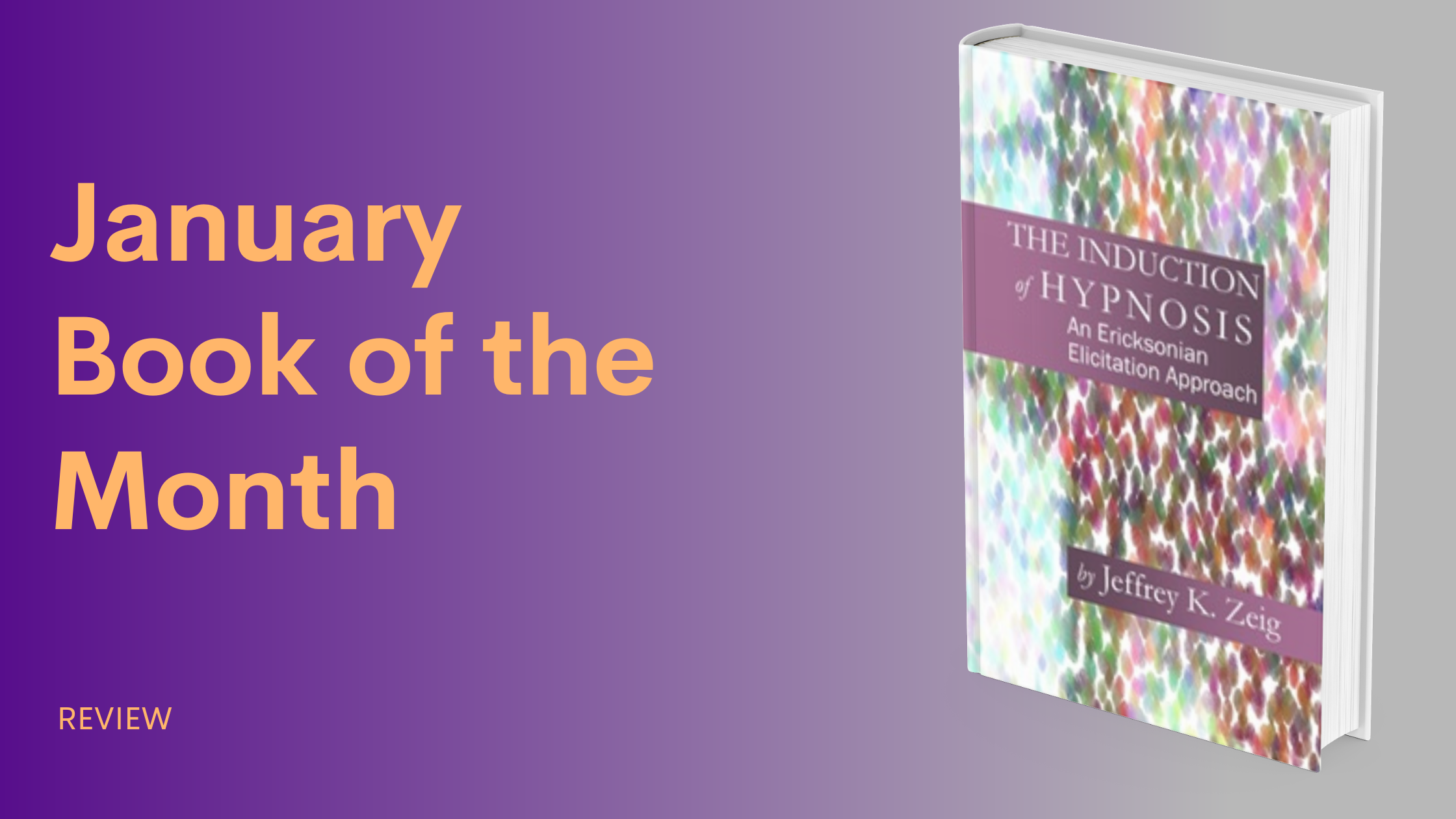
The Induction of Hypnosis: An Ericksonian Elicitation Approach
By Jeffrey K. Zeig, Ph.D.
Looking to deepen your understanding of clinical hypnosis?
The Induction of Hypnosis by Jeffrey K. Zeig, Ph.D., offers an organized, experiential guide to the core principles of Ericksonian hypnotherapy. Whether you're just beginning to explore hypnotic methods or refining an established practice, this book provides practical models, real-world examples, and a clear framework for learning how to elicit therapeutic trance in a clinical setting.
Chapter Topics and Content
The book is organized into twelve chapters, each building a layer of understanding about how hypnosis works, how it can be used clinically, and how Ericksonian methods differ from traditional models.
Some of the core topics covered include:
- A historical and conceptual overview of hypnosis
- An outline of Milton Erickson’s influence and teaching
- A comparison between traditional and Ericksonian models of trance
- A breakdown of key distinctions between emotion, mood, and state
- The idea of hypnosis as a change in state, not merely a scripted process
- Phenomenological and experiential perspectives on trance
- The role of evocative communication in eliciting responses
- The use of metaphor, suggestion, confusion, and micro-behaviors
- Practical language forms for guiding perception and awareness
- The ARE Model (Absorb, Ratify, Elicit) as a framework for hypnotic induction
A Few Highlights
🌀 Perspective on Hypnosis
The book emphasizes a view of hypnosis as a natural, elicitable phenomenon that arises through interaction. Zeig encourages the reader to engage hypnosis as an emergent process built through communication, pacing, and attentiveness.
🌊 Emotion, Mood, and State
In one of the book’s more nuanced discussions, Zeig distinguishes between emotion, mood, and state as different forms of experience. Emotion is short-lived and reactive, such as sudden anger or joy. Mood is broader and more diffuse, like irritability or melancholy. State, however, encompasses a full-body and cognitive configuration of experience. It is the level at which hypnosis operates most effectively.
According to Zeig, helping a client shift state, rather than simply reacting to emotion, enables more lasting, generative change. Hypnosis becomes a vehicle not just for symptom relief, but also for reorganizing how a person relates to experience itself.
🧠 Evocative Communication
Expanding on the conversation about hypnosis work at the level of state, Zeig introduces the concept of evocative communication. This is a way of using language to shape experience without relying on direct instruction. Instead of giving commands or suggestions in a traditional sense, the clinician uses pacing, implication, and imagery to invite the client into a new way of perceiving. This style of communication is designed to elicit internal responses that support trance without needing to label or formalize it. Zeig includes examples of how small adjustments in phrasing or rhythm can help clients move into more receptive and focused states.
✨ The Hypnotic Constellation
Zeig uses the term hypnotic constellation to refer to the pattern of cues that emerge as a client becomes increasingly responsive to hypnosis. These might include changes in breathing, eye focus, skin tone or posture, and they vary from person to person. Rather than relying on a single indicator of trance, the clinician learns to recognize a personalized pattern in each client that signals readiness for deeper work. The constellation serves as a flexible reference point. It helps the therapist gauge when to proceed, when to pause, and how to match their communication to the evolving state of the client.
Key Takeaway
The Induction of Hypnosis offers clinicians a structured and clinically grounded approach to eliciting trance. One of its key features is the practical framework it provides for developing personalized hypnotic inductions. This framework makes the book beneficial not only to experienced practitioners refining their approach, but also to those at the beginning of their study who are seeking a coherent entry point into clinical hypnosis.
The Induction of Hypnosis is available as an eBook through the Milton H. Erickson Foundation Bookstore.

About the Author
Jeffrey K. Zeig, Ph.D., is CEO and Founder of the Milton H. Erickson Foundation. He studied extensively with Milton H. Erickson, M.D., and has taught Ericksonian methods to professionals around the world.
You may also like …

by Roxanna Erickson Klein, RN, PhD, Sheila Rossi, Ernest Rossi, PhD and Kathryn Rossi, PhD
Includes the updating essay—“What is a Suggestion? The Neuroscience of Implicit Processing Heuristics in Therapeutic Hypnosis and Psychotherapy” By Ernest L. Rossi and Kathryn L. Rossi
“For the many who never had the opportunity and never will have the opportunity to attend workshops led by Milton Erickson, this work will serve as an invaluable surrogate. Psychotherapists, in general, as well as hypnotherapists, will find the work rewarding reading and study, for Erickson is above all a psychotherapist, and his modus operandi transcends clinical hypnotism. As for academicians and researchers, I believe they will find enough food for thought and research here to keep them busy for some time to come.” —Andre M. Weitzenhoffer
