

December Book of the Month
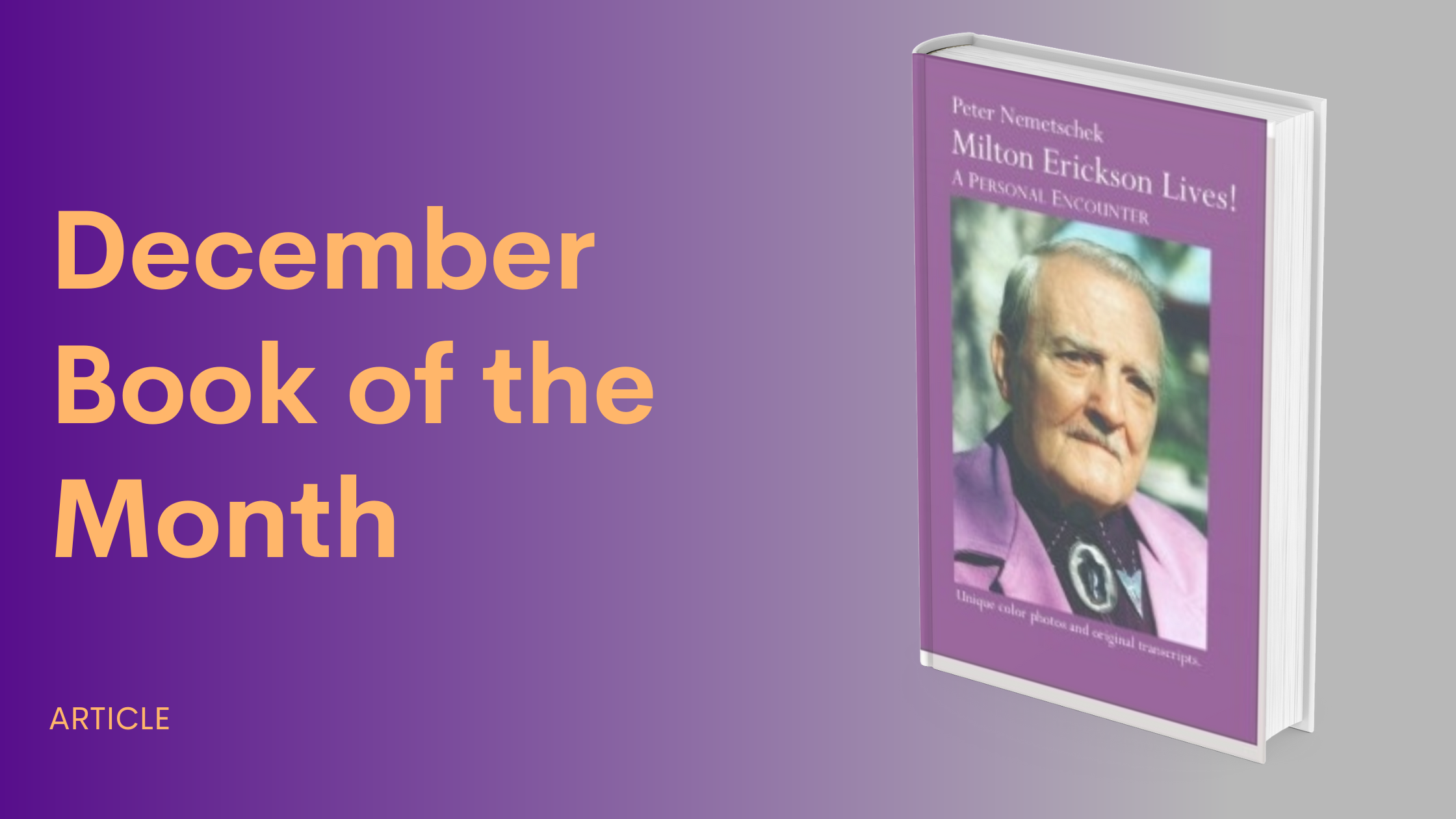
‘Milton H. Erickson Lives! A Personal Encounter’ by Peter Nemetschek
✨ A Rare Invitation into Erickson’s World
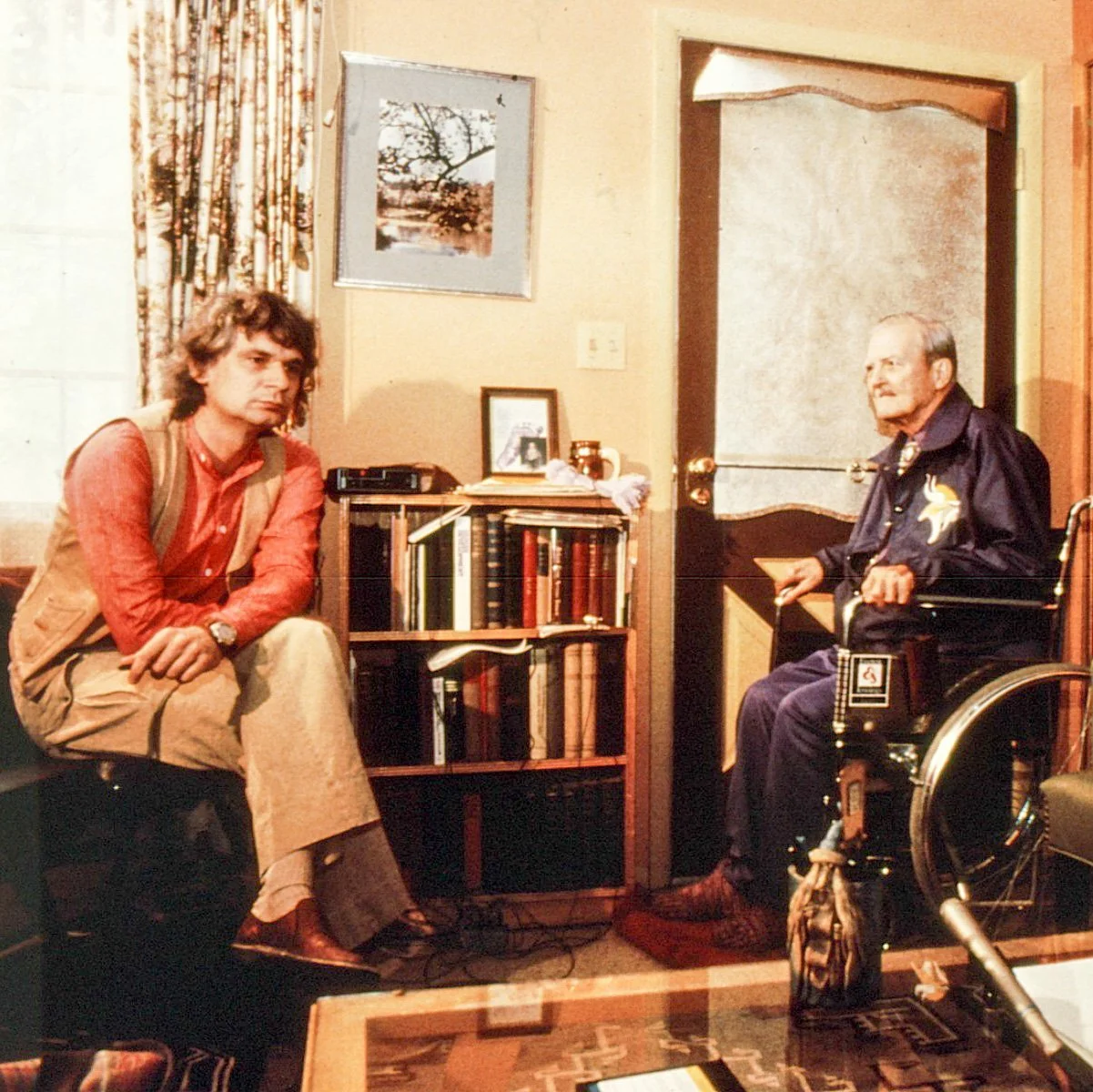
Peter Nemetschek (L) and Milton Erickson (R), 1979.
This volume offers a multifaceted portrait of Milton Erickson during the final years of his teaching life. Originally written in German and later translated into English, it retains a personal, insightful voice shaped by memory and reflection.
German family therapist Peter Nemetschek spent several weeks with Erickson in Phoenix in 1979. Drawing on photographs he took during the seminars, detailed transcripts, personal notes, books, and materials from the Milton H. Erickson Foundation archives, he reconstructs not only what Erickson taught, but how he lived and worked. Nemetschek describes the interior of Erickson’s home, the arrangement of his workspace, the objects he used, and the informal rhythms that shaped daily life around the seminars.
Alongside this documentation, the book includes biographical context about Erickson himself, offering readers a sense of his presence, manner, humor, and way of engaging with students. Interwoven throughout are Nemetschek’s personal reflections and professional insights, written both from the perspective of a young therapist encountering Erickson directly and from the vantage point of later life, as experience and understanding deepened.
🌵 Coming to Phoenix
Nemetschek describes the path that led him into Erickson’s seminars, beginning with a deliberate, handwritten “trance letter” tailored to pique Erickson’s interest. He succeeded and was invited to visit. During that time, Nemetschek paid careful attention to the unfolding of each group session with Erickson, capturing many moments with his camera.
🎙️ Erickson’s Voice, Preserved
A large portion of the book consists of Erickson’s original teaching stories and clinical demonstrations. Nemetschek includes extended transcripts of Erickson discussing humor, language patterns, trance depth, and case examples that ranged from psychosis to childhood bedwetting.
These passages reveal how Erickson often taught on several levels at once. A simple story about childhood might be layered with metaphor, therapeutic direction, and subtle suggestion. Nemetschek effectively captures this multilayered quality.
🧭 A Personal View of Learning
Nemetschek’s personal story adds another facet to the book, one that gives context to why Erickson’s work reached him so deeply. As a child in World War II, he spent nights in air raid shelters and lived through a period marked by fear, fragmentation, and long stretches of amnesia. He describes early experiences that felt trance-like, moments when his awareness narrowed or detached as a way of coping with the uncertainty around him. These childhood states remained largely unexplored until decades later, during his study with Erickson.
During the 1979 seminars, certain exercises, silences, and sensory cues unexpectedly stirred memories he had long lost access to. He writes about entering trance during the sessions and again later while listening to his recordings at home. When preparing this book many years after the seminars, those same memories returned with surprising lucidity as he reviewed the original videos and audio. This process helped him understand how Erickson’s emphasis on unconscious communication resonated with his own history.
Throughout the book, Nemetschek reflects on how these rediscovered memories shaped his clinical sensitivity. He explains that learning to listen beneath the surface of language, something Erickson modeled continuously, allowed him to recognize subtle signals in himself and in his clients. He connects this inner work to later periods of illness, describing how the strengthened relationship with his unconscious became a resource during times of physical and emotional vulnerability.
He presents these experiences straightforwardly, allowing readers to sense how personal history and professional development intertwined for him.
🌴The Phoenix Landscape
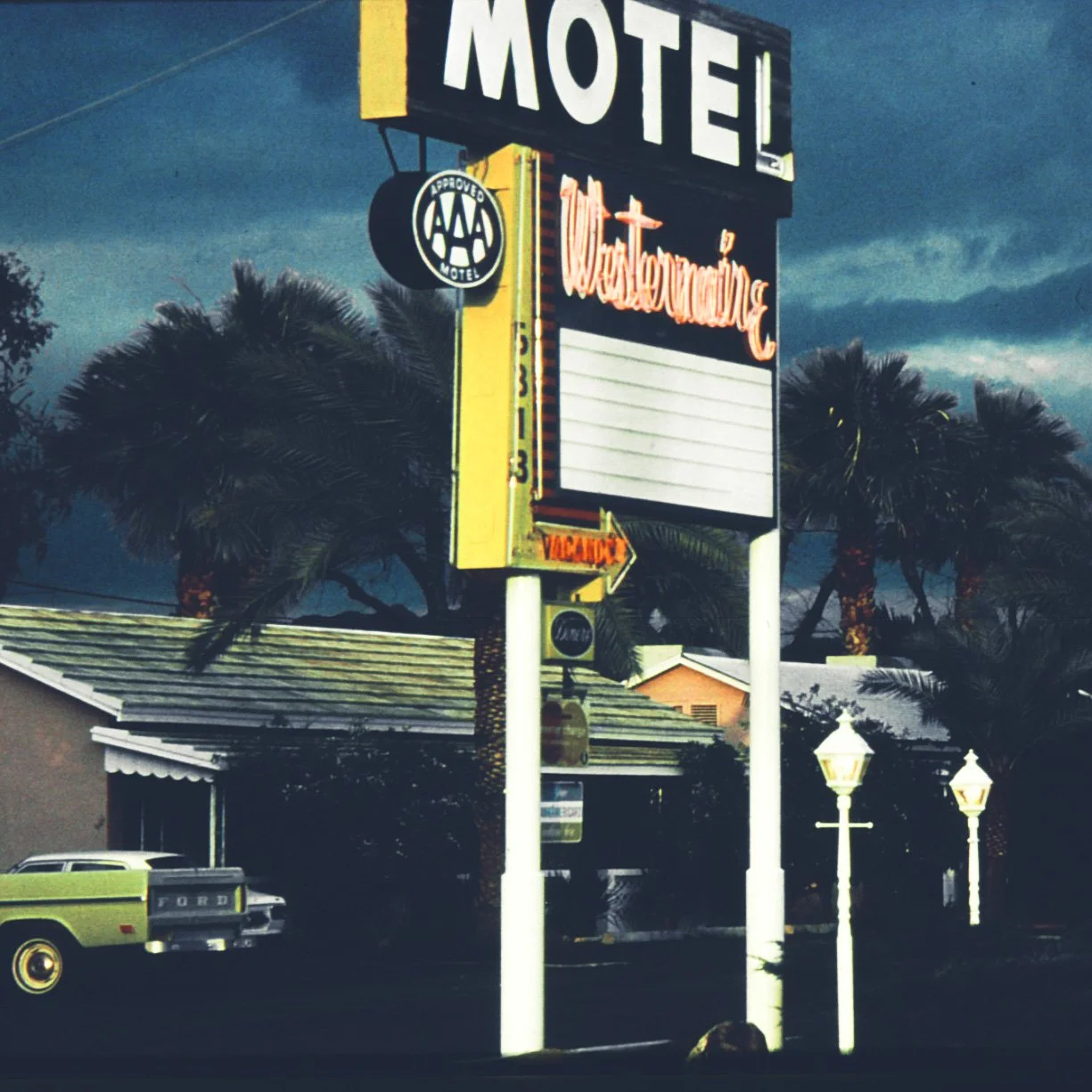
Motel Westernaire in Phoenix – Photo by Peter Nemetschek, 1979
Nemetschek also writes about the world outside the seminar room and how the city of Phoenix further shaped his experience while studying with Erickson. At Erickson’s suggestion, he stayed at the modest Motel Westernaire (since demolished). The accommodations provided a quiet backdrop to the intensity of the seminars, and a lovely view of Piestewa Peak.
Erickson often encouraged visitors to explore Phoenix as part of their learning. Nemetschek describes indirect assignments by Erickson to see places like Piestewa Peak and the Desert Botanical Garden. These outings were designed to heighten attention and curiosity by placing people in unfamiliar environments. At the gardens, Erickson suggested participants search for unusual plants, such as “creeping devils” or the towering boojum tree, without reading the signs. These small missions created moments of discovery that stayed with participants long after their visits.
📚 Why This Book Matters
One of the most valuable contributions of ‘Milton H. Erickson Lives!’ is its collection of original photographs and primary-source material. These resources are a unique documentation of Erickson’s posture, expressions, workspace, and the interpersonal flow of the sessions.
📝 Final Thoughts
Taken as a whole, ‘Milton H. Erickson Lives! A Personal Encounter’ creates a comprehensive depiction of Erickson that few books attempt. Nemetschek shows how seminars, home life, memory, research, and later understanding all contributed to the way Erickson’s work was received and carried forward. The result is a book that feels less like a record of events and more like sustained engagement with a formative experience.
‘Milton H. Erickson Lives! A Personal Encounter’ is available as an eBook through the Milton H. Erickson Foundation Bookstore.
About the Author:
Peter Nemetschek, DGSF, is a family therapist and supervisor in private practice in Munich, Germany. He has been teaching family therapy for over 40 years and is the director of a family therapy institute. He participated in four teaching seminars with Milton H. Erickson and spent ninety days with Virginia Satir. He works with hand, heart and humor. He developed the ‘River of Life Model’, a holistic approach.
You may like …
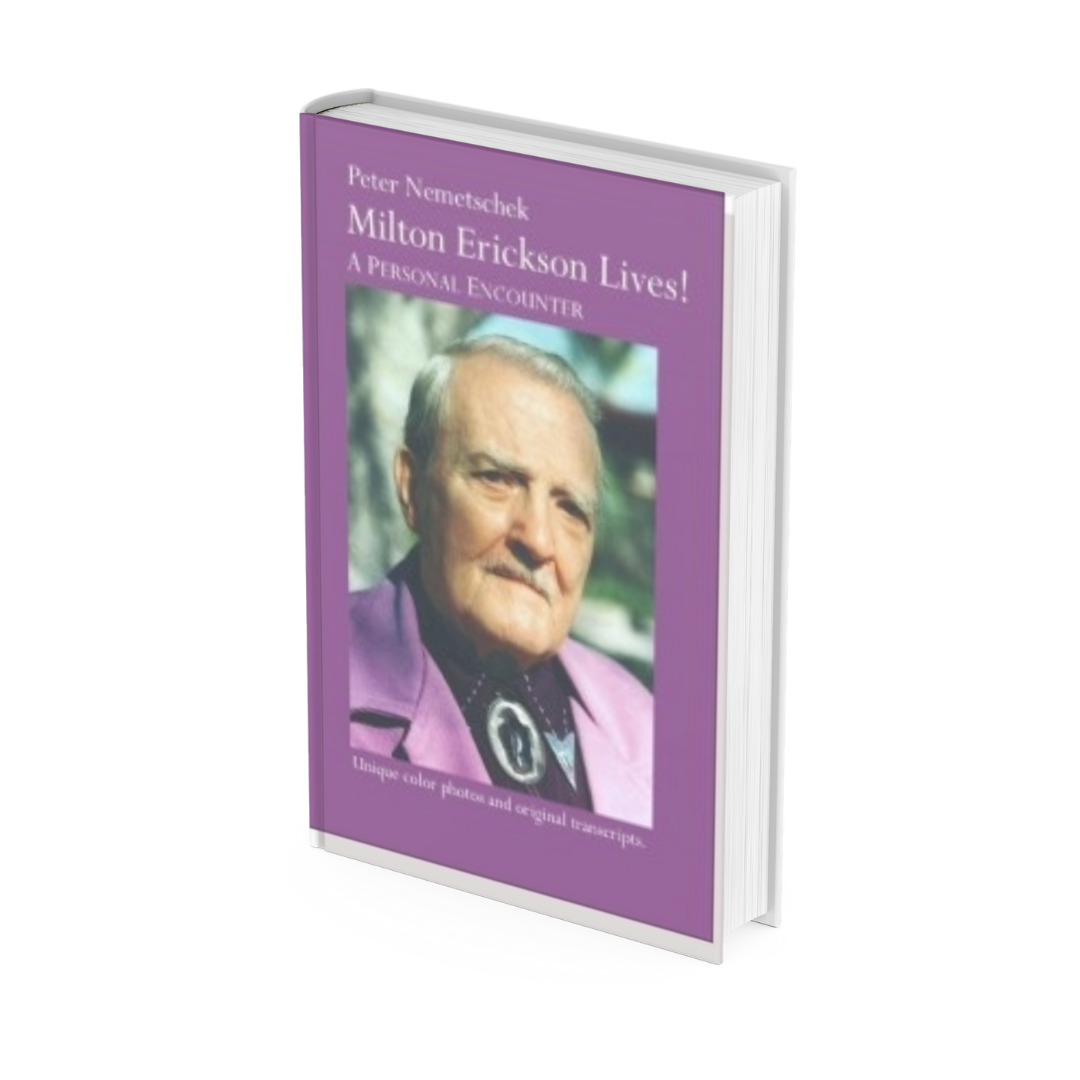
A Personal Encounter
by Peter Nemetschek
Type: Softcover
Milton H. Erickson Lives has the feel of an impressionist painting. In its details and broad strokes, the book focuses on an unusual man - from the perspective of an unusual ma. Original transcripts, rare photographs, and the special tone and palette on memory draw the reader into the vid experience of what is being described. It was an exciting moment for Milton H. Erickson and those who surrounded him, a moment of great clarity, intellectual explosion, a paradigm-shifting investigation-a moment that continues to reverberate powerfully beyond the parameters of that specific period.
Professional Perspectives
by Jeffrey Zeig, PhD
An Epic Life is a biography written by many authors. Throughout his professional life, Milton H Erickson attracted a diversity of critics and supporters, and this book gives all a voice. Erickson was known to work with patients to elicit in them the innate ability to “connect the dots” to discover their adaptive potentials. Readers will delight in being able to connect the dots too, piecing together a portrait of an extraordinary and complex figure, as they look through the eyes of the men and women who met him at important junctures.
An Epic Life draws upon four decades of interviews with professionals who knew Erickson. The incisive perspectives are interlaced with commentary from Jeffrey Zeig to clarify and contextualize. The images of Erickson that emerge are congruent, divergent, myriad. In the end, readers gain unusual access to the man, his commitment, and his work. There is nothing simple in what is conveyed, and yet the impression it makes is coherent — and lasting.

by Stephen R. Lankton
Type: Hardcover
A compilation of essential contributions that span a period of 17 years, this volume highlights the extraordinary breadth of Stephen Lankton’s unique therapeutic approach, its techniques, protocols, and frameworks. The sections include Ericksonian Hypnosis and Therapy, Brief Therapy, Metaphor, Anxiety and Trauma. Within each section readers will discover an array practical and potent material that is certain to enhance the power of therapy, whether or not the therapist is working within an Ericksonian paradigm.
Praise for Assembling Ericksonian Therapy: Collected Papers of Stephen Lankton
“Stephen Lankton’s lucid and readable prose puts the principles and applications of Ericksonian Therapy easily within the grasp of his readers.”
Alexander A. Levitan, M.D., M.P.H.
“This collection reveals why [Lankton] has been at the forefront of the fields of hypnosis and brief, goal-directed psychotherapies for more than two decades. These papers provide readers with an opportunity to share his wisdom.” —
Michael D. Yapko, Ph.D.
“The ideas [are] both practical and imaginative, dealing with hypnotic technique as well as such areas as family violence. This is an expansive presentation of papers ranging from the ideology of Erickson to using therapeutic metaphor in social work.” —
Jay Haley.
The Master Class with Jeffrey K. Zeig, PhD
by Jeffrey K. Zeig
Type: Hardcover
Milton Erickson was my mentor intermittently for more than six years; he was also an inspiration in creating the Master Class. At his essence, Erickson was experiential. He was the most radically experiential therapist to ever practice. Creating transformative experiences is a component in many schools of therapy, including rational emotive behavior therapy and cognitive behavior therapy, but for Erickson being experiential was not merely a component; it was most of his therapeutic work. Hypnosis is essentially an experiential technique. The subtext of hypnosis is this: “By living this experience, you can be different.” Hypnosis is not a means of providing information.
This book is an opportunity to study single-session therapies that are based in experiential methods. The learning from these methods is primarily stimulated by the client living the change, not by intellectual understanding of how to change. The participants declare what they are going to do differently and the sessions are designed to create experiences that foster the accomplishment of stated goals. Participants have solved complex problems and have made significant life changes. They have overcome writer’s block and then completed a book; they are happier in their jobs and relationships; they rebalance work and life; and they surmount childhood trauma.
The transcripts contained here offer opportunities to sit in on live interactions between therapist and client. An extraordinary adjunct to the transcripts are the participants’ — all stellar professionals themselves — notes on the sessions. They are able to articulate their understandings and impressions in such powerful ways that upon reading their perspectives I also took away something new.
Jeffrey K Zeig
