

April Book of the Month

“Continuing the Experiential Approach of Carl Whitaker: Process, Practice, and Magic”
by David Keith, MD
“Carl Whitaker was one of the most influential family therapists of the 20th century. He had his loyal following, including David Keith. He also had critics, such as one therapist who shortly after Whitaker’s death in 1995 called him a Crazyman. Not far from the truth Keith would say, though he defines Crazyman this way: a full-fledged human being: thoughtful, imaginative, down-to-earth, curious, spiritual, smart, playful, inconsistent, tough, tender, ironic, supportive, rebellious, self deprecating, loving, and generous.” – Excerpt from back cover blurb, as featured on the Milton H. Erickson Foundation website.
📚 Introduction
David Keith’s “Continuing the Experiential Approach of Carl Whitaker: Process, Practice, and Magic” is a reflective and conceptually ambitious exploration of the culture and process of psychotherapy, family therapy, and Carl Whitaker’s distinctive clinical style.
Keith’s decades-long personal and professional relationship with Whitaker shapes the project. He writes that he first met him in 1971 during his psychiatry residency at the University of Wisconsin, and over time came to know him as a teacher, mentor, co-therapist, collaborator, and friend.
🎥 What the Book Covers
The book begins with acknowledgements and a foreword by Jeffrey K. Zeig, then moves into an introduction to Whitaker, an extended case discussion, and later chapters on clinical regulations, ambiguity, semiotics, psychotherapy as art, parallel play, irony, and personhood.
The transcript at the heart of the book is from a 1978 case consultation conducted by Carl Whitaker in Rochester, New York. In that session, Whitaker meets with a family whose 22-year-old son is hospitalized and psychotic. The interview serves as a recurring point of reference in Keith’s discussion of Whitaker’s therapeutic style.
🗂️ The Interview
Keith spends a good deal of time walking readers through the consultation itself. He pays attention not only to what is said, but to details such as seating, tone, humor, interruption, and shifts in attention. He is especially interested in the way Whitaker responds to the family as a group rather than focusing only on the hospitalized son.
He also includes a brief segment of recording that was made after the interview. In it, Whitaker says he felt uncertain, off-balance, and afraid the session was not working, at least at first, before it began to open up in a creative way. Keith uses that moment to frame much of the book, emphasizing the therapist’s subjective experience rather than treating therapy as a detached or purely observational process.
🗣️ Language and Larger Themes
Language is one of the book’s central concerns. Keith returns repeatedly to the idea that therapeutic work is shaped not only by what is said, but by syntax, metaphor, association, irony, and shifts in meaning. He contrasts the language of psychotherapy with the more fixed and procedural language of diagnosis, evaluation, and case management.
From there, the book opens into broader reflections on psychotherapy as art, parallel play, irony, personhood, and the therapist’s role. Running through these chapters is Keith’s term ‘therapeusis,’ which he uses for what he sees as the abstract, energetic core of therapeutic experience. Rather than defining it, he returns to it from different angles throughout the book to give it more dimension.
📝 Broader Context
Keith’s book reflects on a consultation interview from a period when experiential and family-based approaches were taking shape alongside other influential therapeutic traditions. This broader psychotherapeutic context makes the book potentially relevant to Ericksonian readers as well, especially since Keith presents Whitaker as a therapist whose work depended heavily on presence, spontaneity, and responsiveness to whatever emerged in the room.
💭Closing Thoughts
What begins as a close look at Whitaker and one of his sessions gradually opens into larger questions about language and the therapist’s role. All the while, Keith also remains attentive to the dimensions of therapeutic work that cannot be fully captured by method alone.
“Continuing the Experiential Approach of Carl Whitaker: Process, Practice, and Magic” is available in softcover and eBook formats through the Milton H. Erickson Foundation Bookstore.
✍️ About the Author
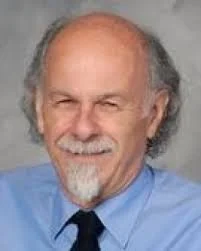
David V. Keith, M.D. (1938-2024), was Professor of Psychiatry and Family Medicine and Director of Family Therapy at SUNY Upstate Medical University in Syracuse, New York. Other books by Dr. Keith include “Defiance in the Family: Finding Hope in Therapy” and “Family Therapy as an Alternative to Medication: An Appraisal of Pharmland.”
You may also like …

by David Keith
Type: eBook
Format: .epub
Carl Whitaker was one of the most influential family therapists of the 20th century. He had his loyal following, including David Keith. He also had critics, such as one therapist who shortly after Whitaker’s death in 1995 called him a Crazyman. Not far from the truth Keith would say, though he defines Crazyman this way: a full-fledged human being: thoughtful, imaginative, down-to-earth, curious, spiritual, smart, playful, inconsistent, tough, tender, ironic, supportive, rebellious, self deprecating, loving, and generous.
Whitaker was a longtime friend, teacher, mentor, co-therapist and collaborator. Their connection lasted 33 years. Whitaker embodied therapeusis, that elusive complex, energetic, and abstract core of psychotherapy. And with this book, Keith calls for a higher order — the reinvigorating of clinical minds in accord with therapeusis. He proposes that therapists listening be more nuanced, and that they playfully and energetically use language in all its forms irony, syntax, metaphor, etc. rather than relying solely on evidence-based methods. Irony, especially, commands Keith s full attention because overregulation he suggests leads to squelched spirits, impaired by irony deficiency.
Keith champions semiotics, offering an analogy of a forest: alive, recycling, blossoming, growing, consuming. If not for the heartless Empire of Overregulation with its lifeless language of business-eze, bureaucracy, and bottom-lines, therapists could more freely pursue their passion for truly helping others. Carl Whitaker took giant steps in this direction, and David Keith continues making the case. Like a marathon runner, Keith has taken up the torch of therapeutic freedom, adding essential perspectives to the real meaning of caring for patients. This is an endlessly rich and creative process in which patients may actually be guided to greater well-being and therapists may avoid the pitfalls of burnout and resignation.

by David Keith
Type: Softcover
Carl Whitaker was one of the most influential family therapists of the 20th century. He had his loyal following, including David Keith. He also had critics, such as one therapist who shortly after Whitaker’s death in 1995 called him a Crazyman. Not far from the truth Keith would say, though he defines Crazyman this way: a full-fledged human being: thoughtful, imaginative, down-to-earth, curious, spiritual, smart, playful, inconsistent, tough, tender, ironic, supportive, rebellious, self deprecating, loving, and generous.
Whitaker was a longtime friend, teacher, mentor, co-therapist and collaborator. Their connection lasted 33 years. Whitaker embodied therapeusis, that elusive complex, energetic, and abstract core of psychotherapy. And with this book, Keith calls for a higher order — the reinvigorating of clinical minds in accord with therapeusis. He proposes that therapists listening be more nuanced, and that they playfully and energetically use language in all its forms irony, syntax, metaphor, etc. rather than relying solely on evidence-based methods. Irony, especially, commands Keith s full attention because overregulation he suggests leads to squelched spirits, impaired by irony deficiency.
Keith champions semiotics, offering an analogy of a forest: alive, recycling, blossoming, growing, consuming. If not for the heartless Empire of Overregulation with its lifeless language of business-eze, bureaucracy, and bottom-lines, therapists could more freely pursue their passion for truly helping others. Carl Whitaker took giant steps in this direction, and David Keith continues making the case. Like a marathon runner, Keith has taken up the torch of therapeutic freedom, adding essential perspectives to the real meaning of caring for patients. This is an endlessly rich and creative process in which patients may actually be guided to greater well-being and therapists may avoid the pitfalls of burnout and resignation.

William Glasser (2000) uses role-play with Marie who is simulating Paul, a male client from her place of employment. Paul has marriage problems. Marie, as Paul, is asked to role-play his wife. Glasser highlights choices, examines the client’s thinking, and focuses on responsible behavior. After the demonstration Glasser explains his work.
Educational Objectives:
To describe the actual differences between therapies.
To describe what the therapist does that is unique to his/her therapy.

Mary Goulding (1995) demonstrates with three volunteer clients. The first is disturbed because his mother did not spend much time with him during childhood. Next Dave is concerned about his distant relationship with his son. The third, Diane describes problems with her mother who is now a widow and overly critical. Goulding explains her work.
Educational Objectives:
To list three viable contracts for change by the patient.
To describe the use of early child scenes in making changes in the present.
