

Wounded Healer

Estimated Reading Time: 2 minutes, 19 seconds
Forty-one years ago, on March 25, 1980, Milton H. Erickson, MD passed away. On that day we remember the genius life of Milton Erickson and the innovative techniques, powerful wisdom, and inspiration he passed on to so many people.
Milton Erickson suffered from many physical ailments from contracting polio at a young age and then being diagnosed with post-polio syndrome. Instead of letting his condition get the best of him, he turned it into a positive, powered through, and used it to further help his patients with their own struggles. He became known as the quintessential “Wounded Healer.”
Dr. Erickson used many techniques to help his patients and tailor the therapeutic experience to the individual patient. Some of the techniques he used were tailoring, utilization, storytelling, metaphors, strategic, destabilization, experiential, and naturalistic. A project, The Core Competencies of Ericksonian Therapy was created so other fellow therapists could learn the foundational principles of Ericksonian Therapy and master techniques like these ones.
He continues to inspire seasoned therapists and newcomers to the Ericksonian community through his rare case videos where you can see him in action, genius knowledge of his techniques from his books and books written by others, and the trainings held by us at the Erickson Foundation where you can continue to learn about Milton Erickson and Ericksonian Therapy. Last week we asked our followers from social media what drew them to Milton Erickson and what did they most enjoy about Milton Erickson and his work. Here are some of the thoughtful responses we received:
“His innovation.” -Joshua Mclaughin
“The way he used words and his dedication.” -Abdullah Alhaddad
“His deep respect for relationship.” -Kathleen B. Shannon
“His revolutionary techniques such as positive reframing and paradoxical interventions.” -Cigdem Yumbul
“Opening up new horizons. Whatever he did, all that he did it worked.” -Hakan Bilgen
“His willingness to help in any natural way that he discovered and to make it feel like a healing magic!” -Hai Sitbon
No matter if you were one of Milton Erickson’s mentors like Dr. Jeffrey Zeig, you’ve been a loyal supporter of his work for years, or you’re just now learning about this brilliant man and his work, we can all agree he persevered through all he had experienced and used it to help his patients heal in any way he could. He shared so many examples of innovative thinking and exceptional psychotherapy techniques with the world and his legacy continues to live on because of it. Here is a video of Dr. Jeffrey Zeig sharing a special tribute to Milton Erickson and to honor the anniversary of his passing.
https://www.youtube.com/watch?v=srYnXM7JJd8
You can also read a wonderful tribute blog post from last year that gives you a backstory to Milton Erickson’s life and includes words of gratitude from two therapists he mentored. Read it here.
You may like…
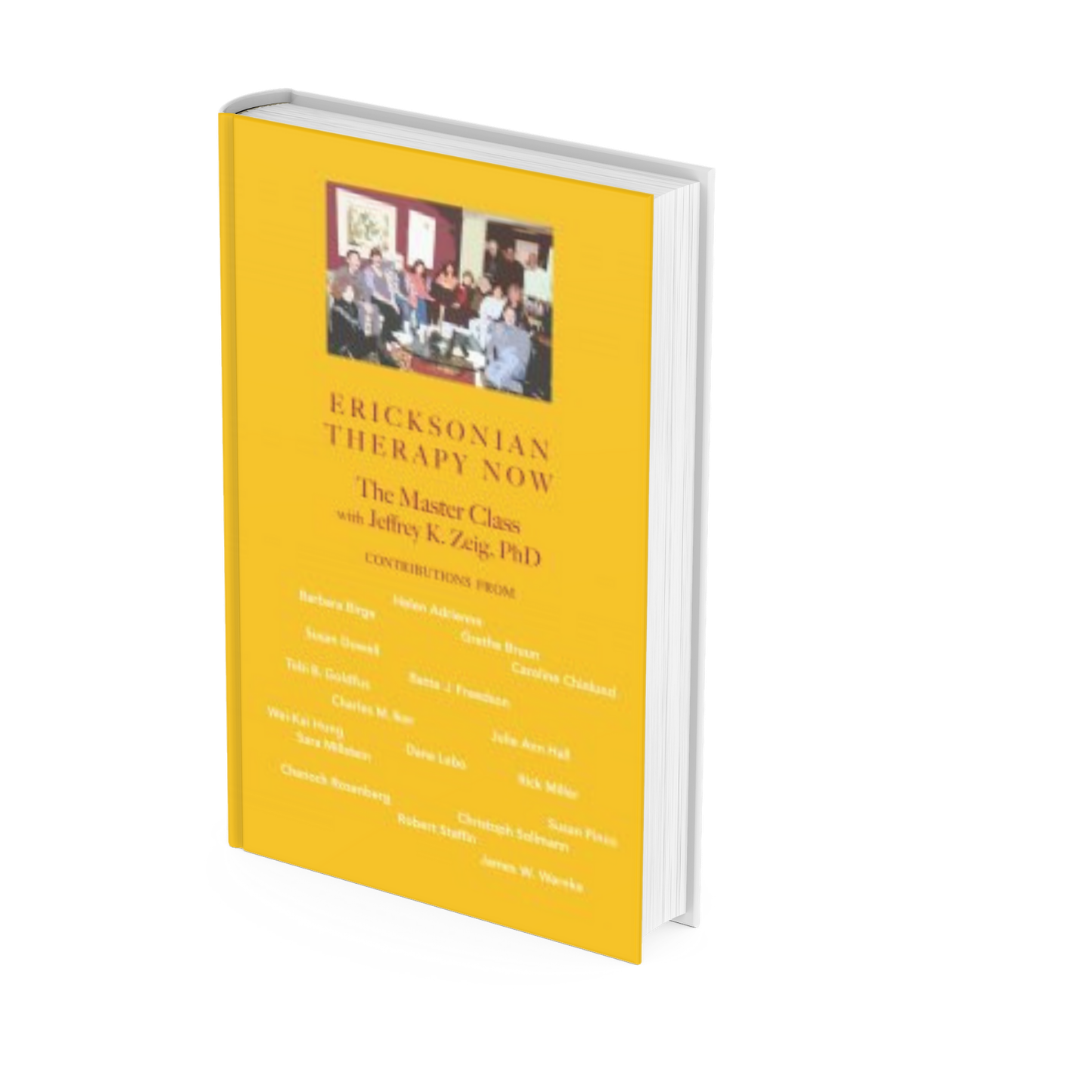
The Master Class with Jeffrey K. Zeig, PhD
by Jeffrey K. Zeig
Type: Hardcover
Milton Erickson was my mentor intermittently for more than six years; he was also an inspiration in creating the Master Class. At his essence, Erickson was experiential. He was the most radically experiential therapist to ever practice. Creating transformative experiences is a component in many schools of therapy, including rational emotive behavior therapy and cognitive behavior therapy, but for Erickson being experiential was not merely a component; it was most of his therapeutic work. Hypnosis is essentially an experiential technique. The subtext of hypnosis is this: “By living this experience, you can be different.” Hypnosis is not a means of providing information.
This book is an opportunity to study single-session therapies that are based in experiential methods. The learning from these methods is primarily stimulated by the client living the change, not by intellectual understanding of how to change. The participants declare what they are going to do differently and the sessions are designed to create experiences that foster the accomplishment of stated goals. Participants have solved complex problems and have made significant life changes. They have overcome writer’s block and then completed a book; they are happier in their jobs and relationships; they rebalance work and life; and they surmount childhood trauma.
The transcripts contained here offer opportunities to sit in on live interactions between therapist and client. An extraordinary adjunct to the transcripts are the participants’ — all stellar professionals themselves — notes on the sessions. They are able to articulate their understandings and impressions in such powerful ways that upon reading their perspectives I also took away something new.
Jeffrey K Zeig

The Collected Papers of Milton H. Erickson on Hypnosis - Vol 2
by Milton H. Erickson
Edited by Ernest L. Rossi
Rating of 5

by Brent B. Geary and Jeffrey K. Zeig
Type: Hardcover
Timed to celebrate the 20th anniversary of the Milton H. Erickson Foundation, this volume brings together 40 of the field’s innovators to demonstrate both the breadth of Ericksonian therapy – from pain management to trauma resolution – and the clinical considerations attending its use.
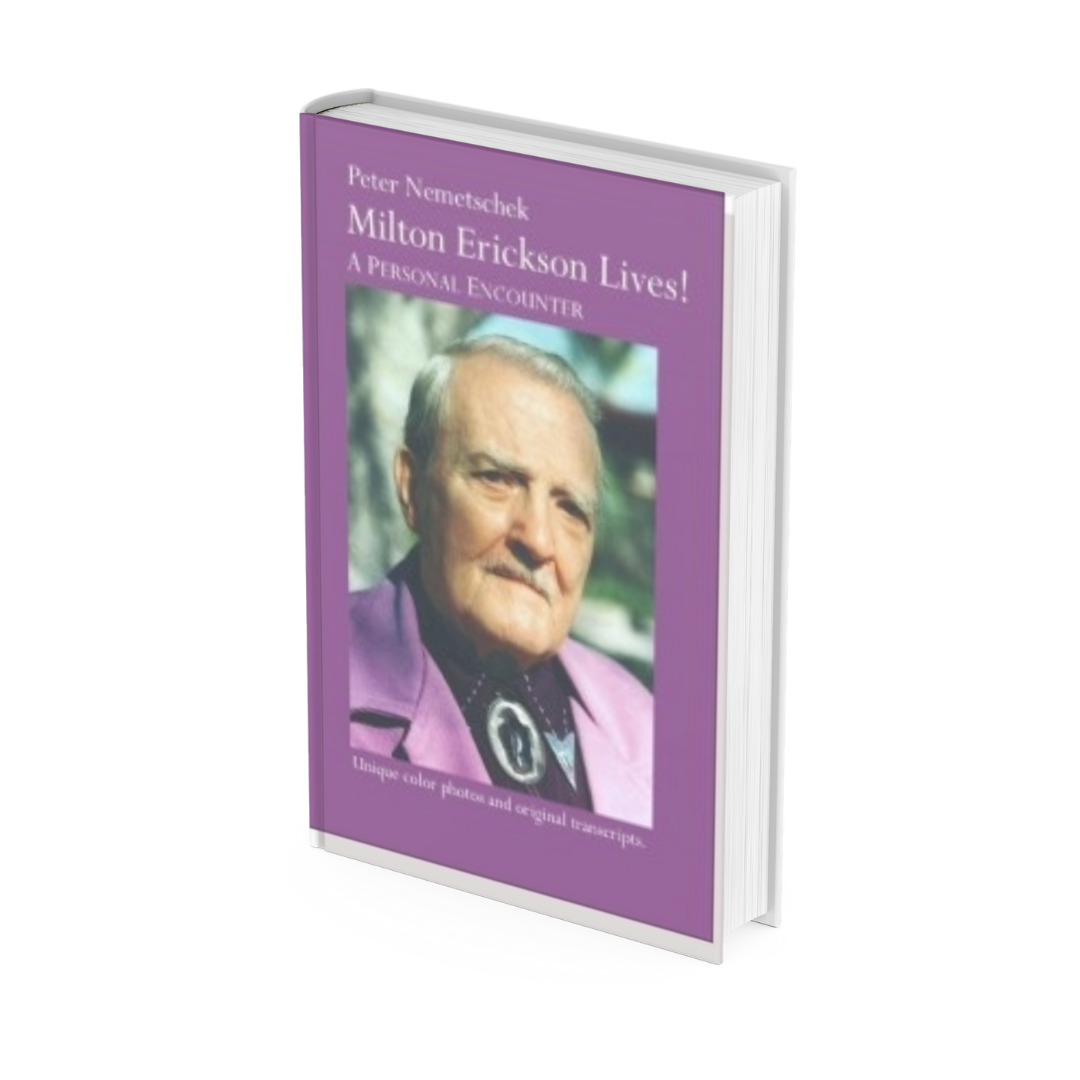
A Personal Encounter
by Peter Nemetschek
Type: Softcover
Milton H. Erickson Lives has the feel of an impressionist painting. In its details and broad strokes, the book focuses on an unusual man - from the perspective of an unusual ma. Original transcripts, rare photographs, and the special tone and palette on memory draw the reader into the vid experience of what is being described. It was an exciting moment for Milton H. Erickson and those who surrounded him, a moment of great clarity, intellectual explosion, a paradigm-shifting investigation-a moment that continues to reverberate powerfully beyond the parameters of that specific period.