

What Is Your IQ
By: Henry Close, Th.M. Atlanta, GA
A friend’s son met a woman on a trip to Hong Kong and they fell madly in love. She moved to the United States and the couple lived together as they planned their wedding. The woman soon discovered, to her horror, that her fiance was extremely critical and verbally abusive. He rationalized these ways of treating her, and as he was very intelligent (and very proud of it) he could always talk her into accepting his logic.
The young woman felt trapped. She wanted to marry him for many reasons but did not want to be treated as he was treating her. She complained to her future mother-in-law, who totally supported her. But, alas, the son had never taken seriously anything his mother said. At that point, the mother asked for my advice.
I offered a few suggestions and then composed the following story for the young woman. I “invented” a book in which this “Tale of Oriental Wisdom” appeared, and “invented” a publishing house to accompany it. I used the Japanese version of my name: Kurosu San Ga (San Ga is an honorific and Kurosu is Close) as author and editor of the book. The story went like this:
“After being married only a few months, the young bride was exceedingly unhappy. Her husband would frequently criticize her viciously over the slightest thing that displeased him-the table was not set properly, there was a wrinkle in the clothes she had washed. His attacks became more and more angry and more and more intimidating for the young bride.
“It was only when the young woman packed her bags to return to her father that the husband was willing to consult with the wise elder at the temple. The wise one greeted them with a courteous bow and the young woman described her unhappiness at her husband’s verbal attacks.
“The husband replied respectfully, ‘O wise one, my wife is exaggerating. Besides, she knows I mean nothing by it. I am only blowing off steam.’
‘I see,’ said the wise one. He thought for a moment and then asked, ‘Tell me, what is your Q?’
‘It is one hundred forty, O Respected ‘
‘Then you are very intelligent,’ the wise one replied. ‘You are more intelligent than I. But I do not understand an intelligent man damaging an important relationship over things that are trivial.’ The husband had no answer.
“The wise one turned to the wife. ‘My dear, you must understand that there is a difference between intelligence and wisdom. Intelligence refers to one’s capacity for wisdom. Wisdom has to do with the ways in which one actually lives. Your husband is very young now and it often takes time for wisdom to develop. When your husband’s wisdom approaches his intelligence, he will understand that your love is a gift to him rather than something to which he is entitled.
‘When his wisdom approaches his intelligence, he will look quietly for solutions rather than complain loudly about problems.
‘Now go in peace, both of you. Do not speak for the remainder of the day, but meditate on these words.’
“The young couple faithfully obeyed the wise one and did not speak. But they did meditate on the words of the wise one.
“Several months later, the husband once again spoke angrily to his wife. No longer intimidated, she looked into his eyes with love and confidence and asked, ‘Tell me, my husband, what is your I.Q?'”
From: Tales of Oriental Wisdom, pp 76. Kurosu San Ga, editor. 1972. Orient Publishers, Hong Kong.
(Adapted from “What is Your IQ?” The Journal of Pastoral Care, Winter 2001. Used by permission.)
You may like…

by Jeffrey K. Zeig
Type: Softcover
Need some good advice? Have questions about your marriage, dating, children, money, sex, even cheating, or divorce? It’s all covered here.
Seventy psychologists, therapists and counselors who regularly help couples with their relationship issues were asked to create ten basic rules that every couple needs.
Each set of “commandments” deals with something essential, from general areas such as making your relationship last or maintaining connection to more specific challenges like rekindling passion, dealing with infertility, or financial issues. The “commandments” have been collected from a remarkable panel of exemplary experts who work extensively in relationship counseling and relationship improvement. In addition, each contributor had no knowledge of what the others had written. What distinguishes this book from others is that the inspirations are presented as easy to reflect upon “sound bites.” Once digested, they can be internalized as “commandments,” commandments that will enrich your primary relationships.
Contributors include: John Gottman & Julie Gottman, Harville Hendrix, & Helen LaKelly-Hunt, Harriet Lerner, Pat Love, Terry Real, Marty Klein, Cloé Madanes, Judith Beck, Helen Fisher, Lisa Firestone, Sue Johnson, Bill O’Hanlon, Michele Weiner-Davis, Claudia Black, Jon Carlson, Scott Miller, Reid Wilson, Daniel Amen, Janet Abrams Spring, Phillip Zimbardo —And more, covering all topics with over 80 sets of commandments.
Highly readable, practical and profound, this book invites you to sit down with the finest minds in couples therapy. And when it comes to the most important aspect of life — the intimate relationship at its center — who doesn’t need some good advice now and then?
About the Editors:
JEFFREY K. ZEIG, PHD is the founder and Director of the Milton H. Erickson Foundation, having studied intermittently with Dr. Erickson for more than six years, He has edited, co-edited, authored, or coauthored more than 20 books now available in twelve foreign languages. His current area of interest is extracting implicit codes of influence from various arts, including movies, music, painting, poetry, and fiction that can be used to empower professional practice, and everyday communication. Dr. Zeig is the architect of The Evolution of Psycho-therapy Conferences, and organizes the Brief Therapy Conferences, the Couples Conferences, and the International Congresses on Ericksonian Approaches to Hypnosis and Psychotherapy. Dr. Zeig is on the Editorial Board of numerous journals; is a Fellow of the American Psychological Association (Division 29, Psychotherapy); and Fellow of the American Society of Clinical Hypnosis. He is a Distinguished Practitioner in the National Academy of Practice in Psychology of the National Academies of Practice. A psychologist and marriage and family therapist in private practice in Phoenix, Arizona, Dr. Zeig conducts workshops internationally (more than 40 countries). Specialty topics include experiential psychotherapy, hypnosis, and brief therapy with various clinical problems. Dr. Zeig has spoken at major universities and teaching hospitals including The Mayo Clinic, Men-bingers and MD Anderson. He is president of both Zeig, Tucker & Theisen Publishers in the behavioral sciences, and the Erickson Foundation Press.
TAMI KULBATSKI, PSY.D., C.PSYCH. is a psychologist registered with the College of Psychologists of Ontario. She holds a Doctorate degree in clinical psychology and has over 15 years of clinical experience. Dr. Kulbatski runs a private practice in Toronto, Canada where she provides psychotherapy and counsel-ing to adults, couples, and adolescents. She is the founder and director of the Toronto Centre for Positive Psychology. Dr. Kulbatski has held a position as core faculty member at a graduate school for psychology, and has taught extensively in the field of psychology. She has been quoted in numerous national magazine and newspaper articles. Dr. Kulbatski provides lectures, seminars and work-shops on various topics, including Positive Psychology, Happiness, Dating, Relationships, Marriage, Communication, Self-Esteem, Coping with Stress, and Striving for Psychological Well-Being. She is a dynamic speaker who enjoys inspiring and motivating her listeners to maximize their potential and to achieve happiness and fulfillment in their lives.
10 Commandments For Every Aspect of your Relationship Journey
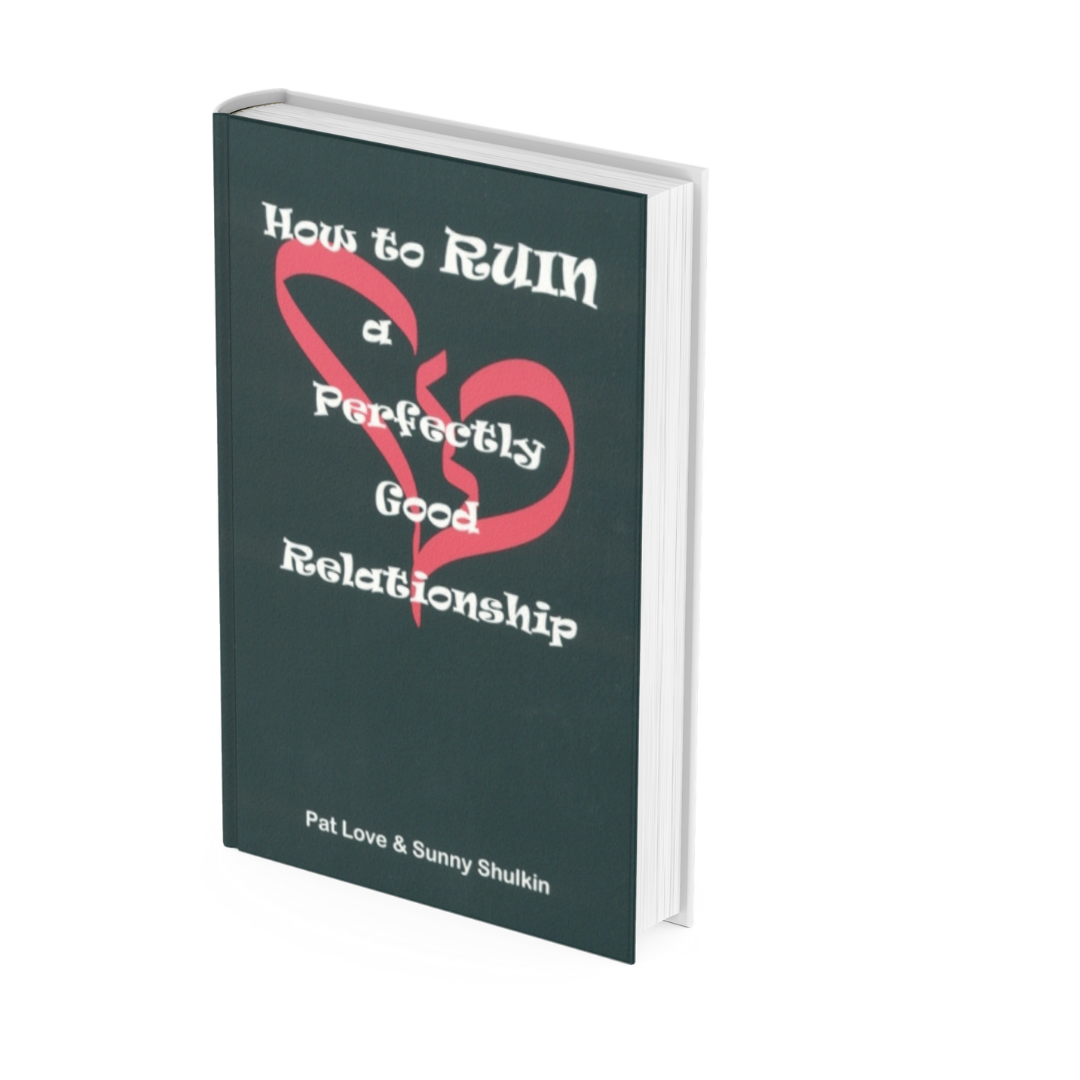
by Pat Love and Sunny Shulkin
Type: Softcover
If your relationship were a garden, what shape would the flowers be in?
Pat Love and Sunny Shulkin shed some sunshine on the question as they take a humorous look at the things we all do that whittle away at perfectly good relationships.
How To Ruin a Perfectly Good Relationship is an eye-opening guide to the multitude of ways so many of us whittle, whether it’s taking our partner for granted, treating him or her like a stranger, making mountains out of mole hills, or engaging in any number of other nasty habits. Problem is that relationships really are like gardens–they need to be tended, cared for, nurtured, for if they are not, they die.
Tiny in stature but big in vision, this book is a playful exploration that will have you giggling as you count how many times you or your partner appear in its pages. But Pat and Sunny have serious business in mind: they point out that research shows that the behaviors described, no matter how insignificant they seem, over time erode the love between two people. And since the majority of couples indicate that “growing apart” is the reason for the dissolution of their relationship, this isn’t really a laughing matter.
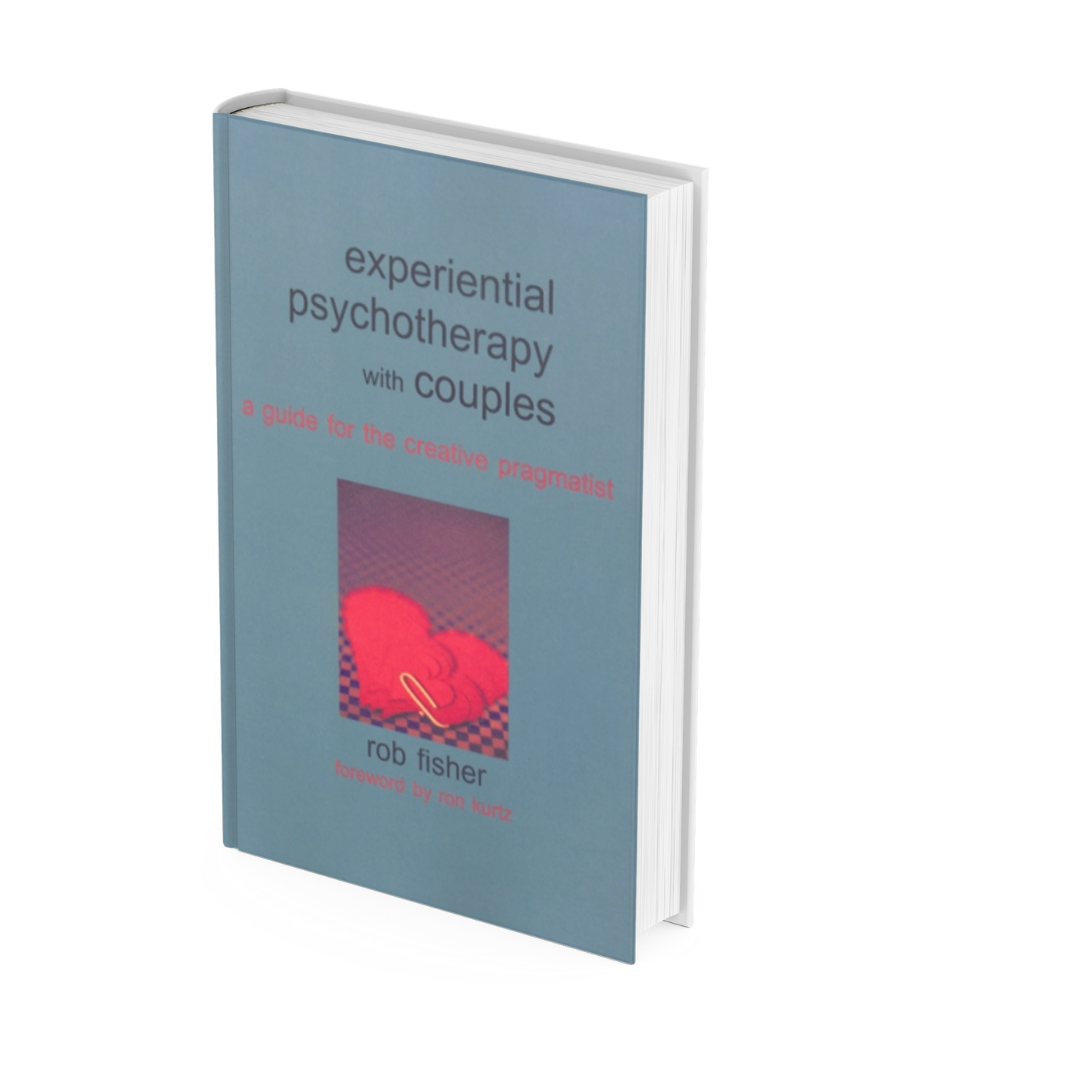
A Guide for the Creative Pragmatist
by Rob Fisher
Type: Softcover
Ever read a book or attended a workshop and thought that the ideas were great, but then were lost when you tried to apply them yourself? This phenomenon seems to be particularly common in the field of psychotherapy. The charisma effect: when the words sound convincing and the teacher teaches well, but the concepts disintegrate in practice.
Well, now Rob Fisher steps forward with a new book entitled Experiential Psychotherapy with Couples: A Guide for the Creative Pragmatist, in which he not only describes the approach, he explains step by step how to put it into action. Depth and brevity are the two guideposts of the writing, and ample case material and innovative exercises clarify the experiential techniques presented as well as their underlying principles. Fisher’s approach helps to move clients (and therapists) from insight to impact as it uncovers opportunities to access and then shift the couple’s negative interactive impulses – by engaging them thoughtfully rather than denying their purpose — toward creating a more satisfying and balanced relationship.
For therapists of any discipline, this book offers practical ways both to understand and to intervene with couples across several dimensions simultaneously. Since issues exist on many levels, so too should therapy if it is to be truly effective and enduring. Rob Fisher’s goal? For readers not only to find the book “interesting,” but for them to be able to customize and employ what they learn within their own clinical practice.
Rob Fisher has performed the delicate task of integrating classical theories & techniques of couples psychotherapy with such important innovations as non-violence, mindfulness, and bodymind holism. His advocacy of freeing ourselves from character strategies that cripple our capacity for relatedness rings true. Using lots of clear clinical examples, he guides the reader through experiential methods of assessing couples problems, and shares experiential means to unravel them. Accessible and imminently usable, this book can be used by therapist and couple alike to plumb the depths of relational intimacy. I plan on assigning it to both my students and clients. Christine Caldwell, Ph.D., LPC Director, Somatic Psychology Department Naropa University Boulder, Colorado author of Getting in Touch: The Guide to New Body-Centered Therapies.

by Terry Hargrave
Type: Softcover
"A wise, balanced, and original approach to fostering a strong ‘us’ in marriage without losing the ‘you’ and ‘me.’ Hargrave is onto something that nobody in our field has captured before.
–William J. Doherty, Ph.D.
This fresh perspective on what makes marriages work will jumpstart the efforts of every couples therapist. At its core is Hargrave’s message that much of what is currently done in couples therapy misses the point, focusing all attention on the need to accumulate more and more skills and to work toward ever-greater self-actualization. While there is a time and place for both of these concerns, Hargrave suggests that the real answer resides in some new math. Where once we believed that two became one, and then, more recently, that two remained two, Hargrave proposes that in strong marriages, two become three.
The Essential Humility of Marriage explores the landscape of “you,” “me,” and “we.” The book clearly carves out this third identity, and then describes how its expectations and desires can take precedence over those of the individual partners–without taking away from either one. Why the concept of “us” plays such a central role in satisfying marriages is explained, and ways in which therapists can help couples first to acknowledge and then to strengthen that “us” are demonstrated.
Hargrave doesn’t offer a single method or technique so much as an entirely new perspective on what healthy, growing marriages have in common, and where foundering marriages have gone wrong. He has written this book to help therapists help their clients to regain–or perhaps to discover for the first time–the rich mutual benefits that can come with a long-term relationship.