
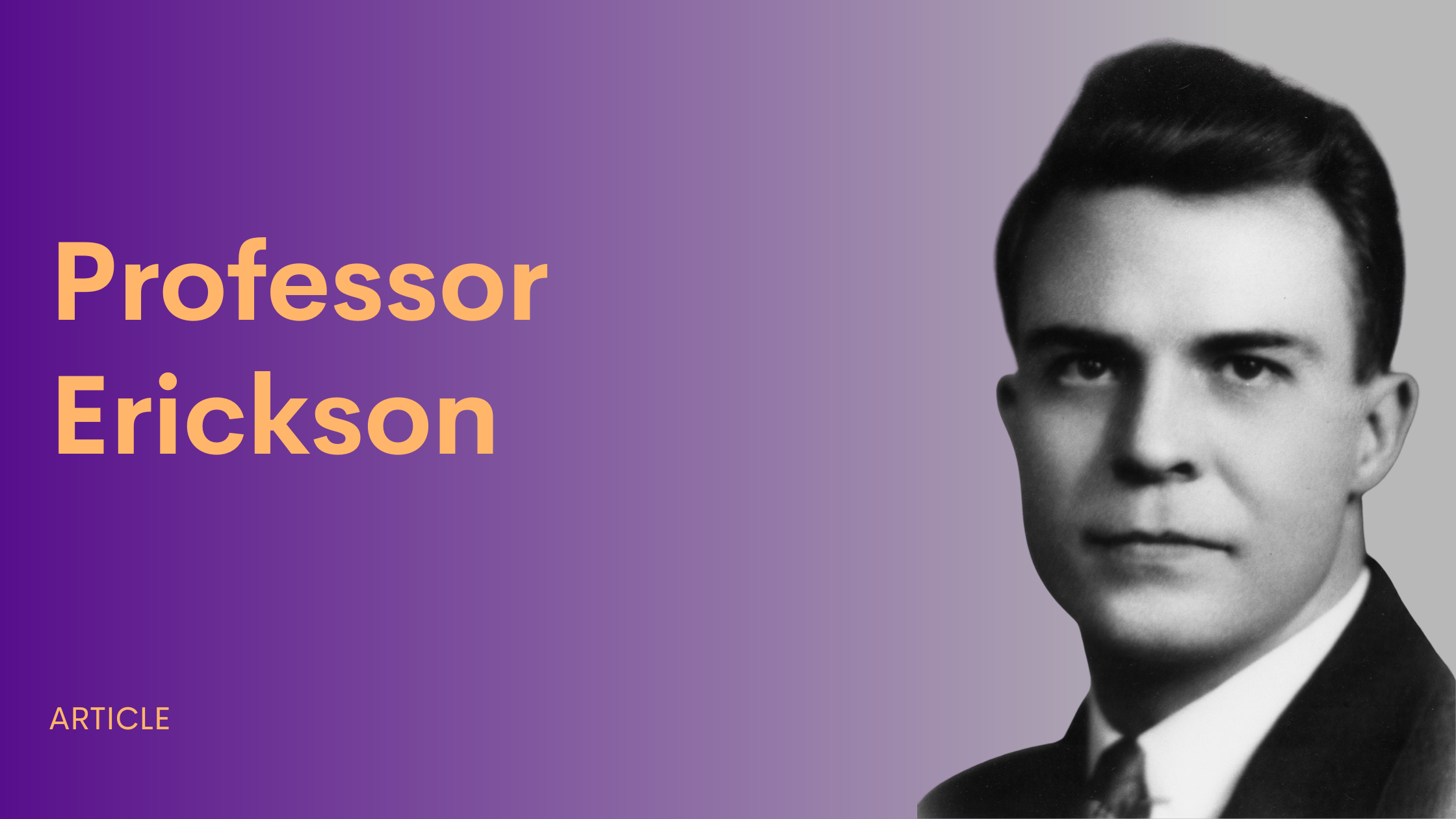
Professor Erickson
READING ASSIGNMENT
FOR JUNIOR PSYCHIATRY
WAYNE UNIVERSITY, SCHOOL OF MEDICINE
by joyce bavlinka, m. ed., liac
According to “An Epic Life II’ by Jeffrey k. Zeig, Ph.D., Milton Erickson moved to Eloise Hospital and Infirmary in Michigan in 1934 as the director of research and training. Dr. Erickson also became an Associate Professor of Psychiatry at the Wayne County University College of Medicine.
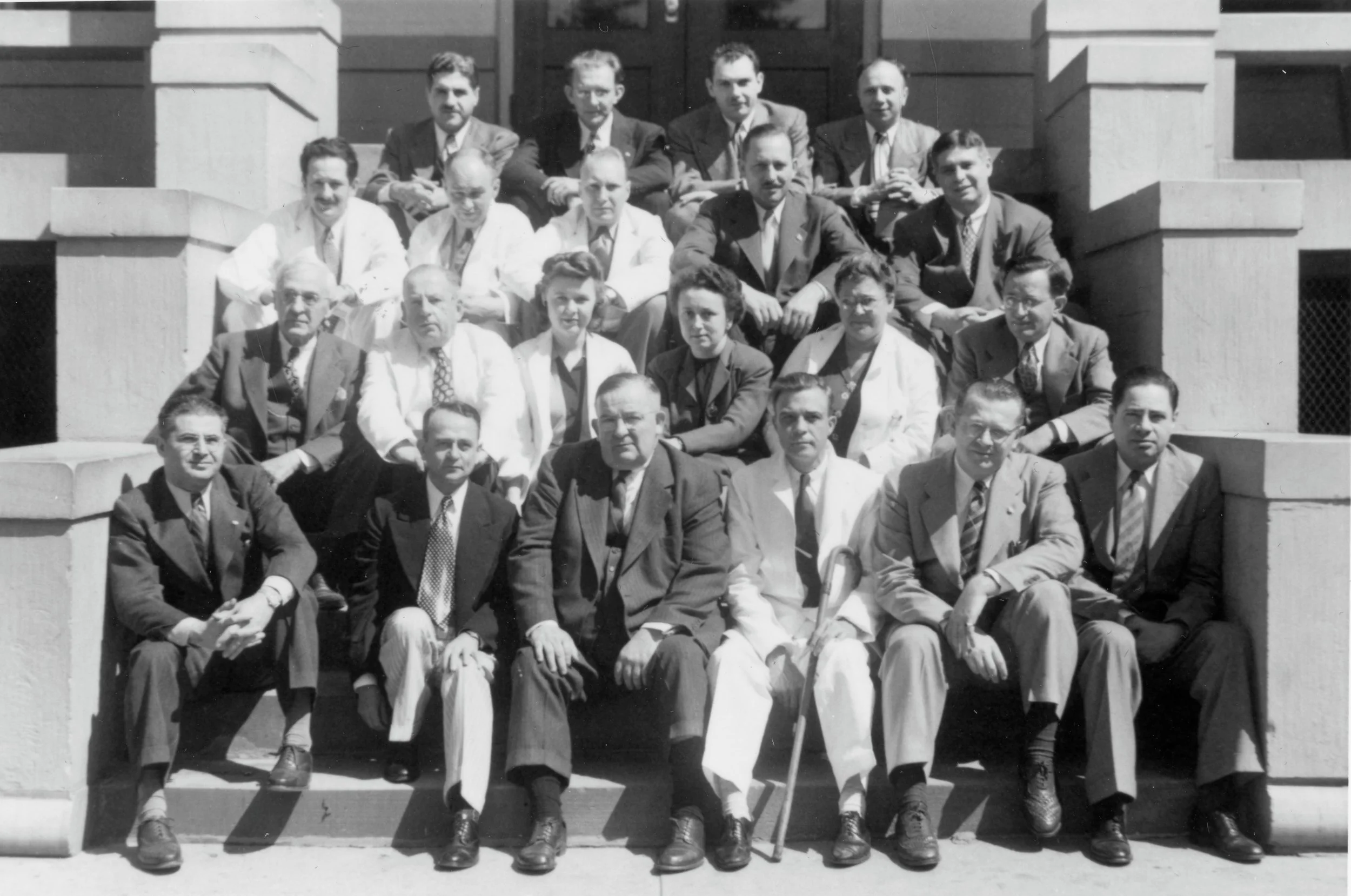
Staff Photo, Wayne County University College of Medicine, 1946. Dr. Erickson is front row, third from the right. From The Milton H. Erickson Foundation Archives.
The Foundation Archives Manager, Sarah Clinebell, located a box of records from Erickson’s time at Eloise, Box R1-C4-S17-U8, containing several loose-leaf binders with correspondence and patients’ automatic drawings. In one of the notebooks there was a two-page reading list for Erickson’s psychiatry class at Wayne University School of Medicine, “Reading Assignment for Junior Psychiatry.” While the document is not dated, we believe from the dates of publication of the books that the list was developed for classes between 1945 and 1948.
His reading list includes a broad base of psychology and psychiatry theories and causality, diagnosis, approaches and case studies, including the importance of unconscious conflicts and early life experiences. Some books favored detailed patient histories while others emphasized causality through social upbringing and environmental factors.
Formal classification of mental disorders began after World War I and was designed primarily for diagnosing inpatients with severe psychiatric and neurological disorders. At one point in time, Eloise provided institutionalization of the “incurable insane.” Starting in the late 1950’s and into the 1960’s, treatment of mental illness went from care in large state institutions to treatment in the community.
After World War II, additional diagnoses came into use to assist in diagnosing returning soldiers with shell shock and determining fitness for duty. According to www.psychiatry.org, the Veterans Administration expanded its definitions of mental illness into “ten categories for psychoses and psychoneuroses and seven categories for disorders of character, behavior, and intelligence.” Classifications were not codified until 1952 with the publication of the Diagnostic and Statistical Manual of Mental Disorders [DSM–1] by the American Psychological Association. The current DSM-5 has 20 major categories and over 70 disorders.
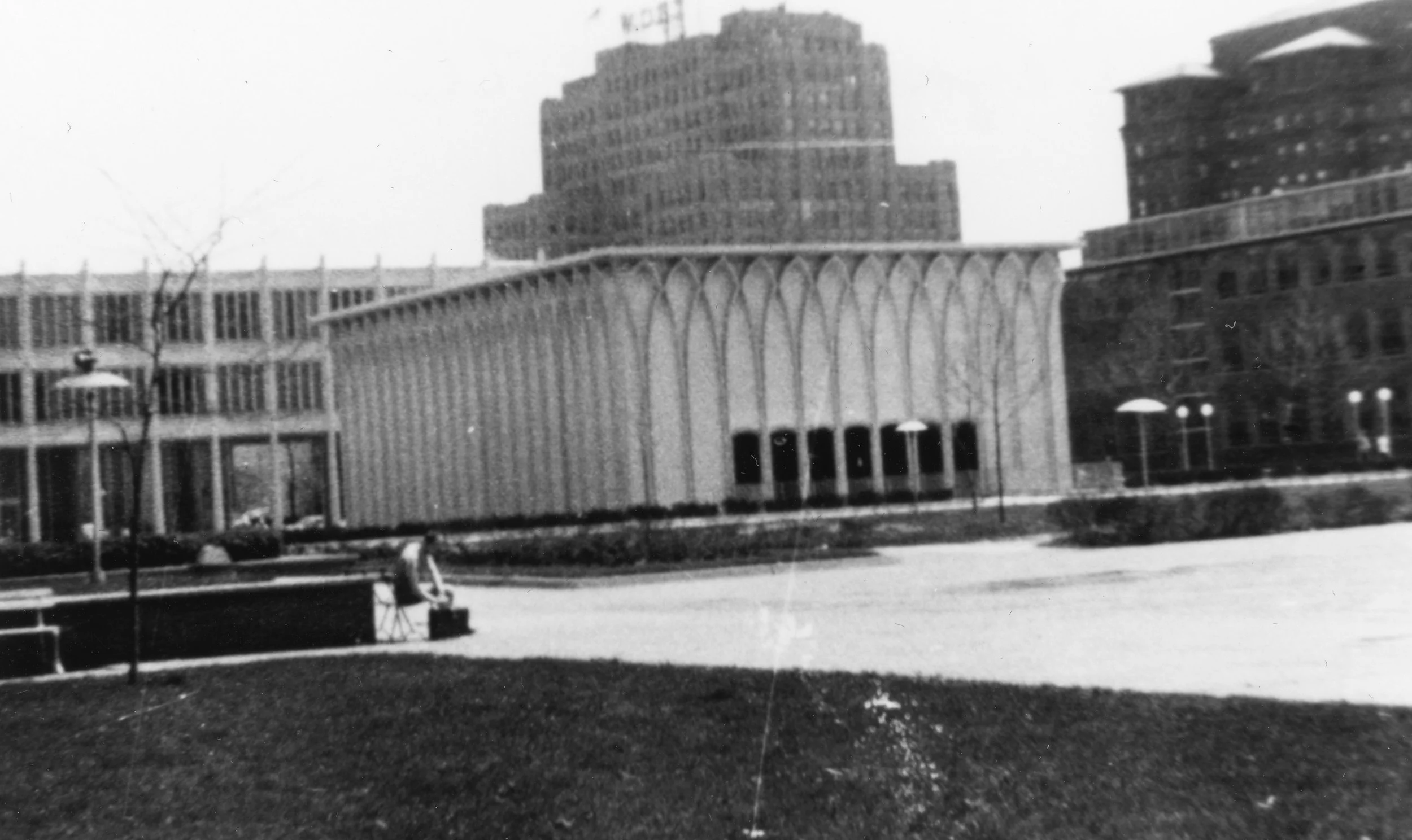
Wayne State University, April 1965. From The Milton H. Erickson Foundation Archives.
Erickson required students to read at least six books. Some were mandatory, while others allowed for selection among several options.
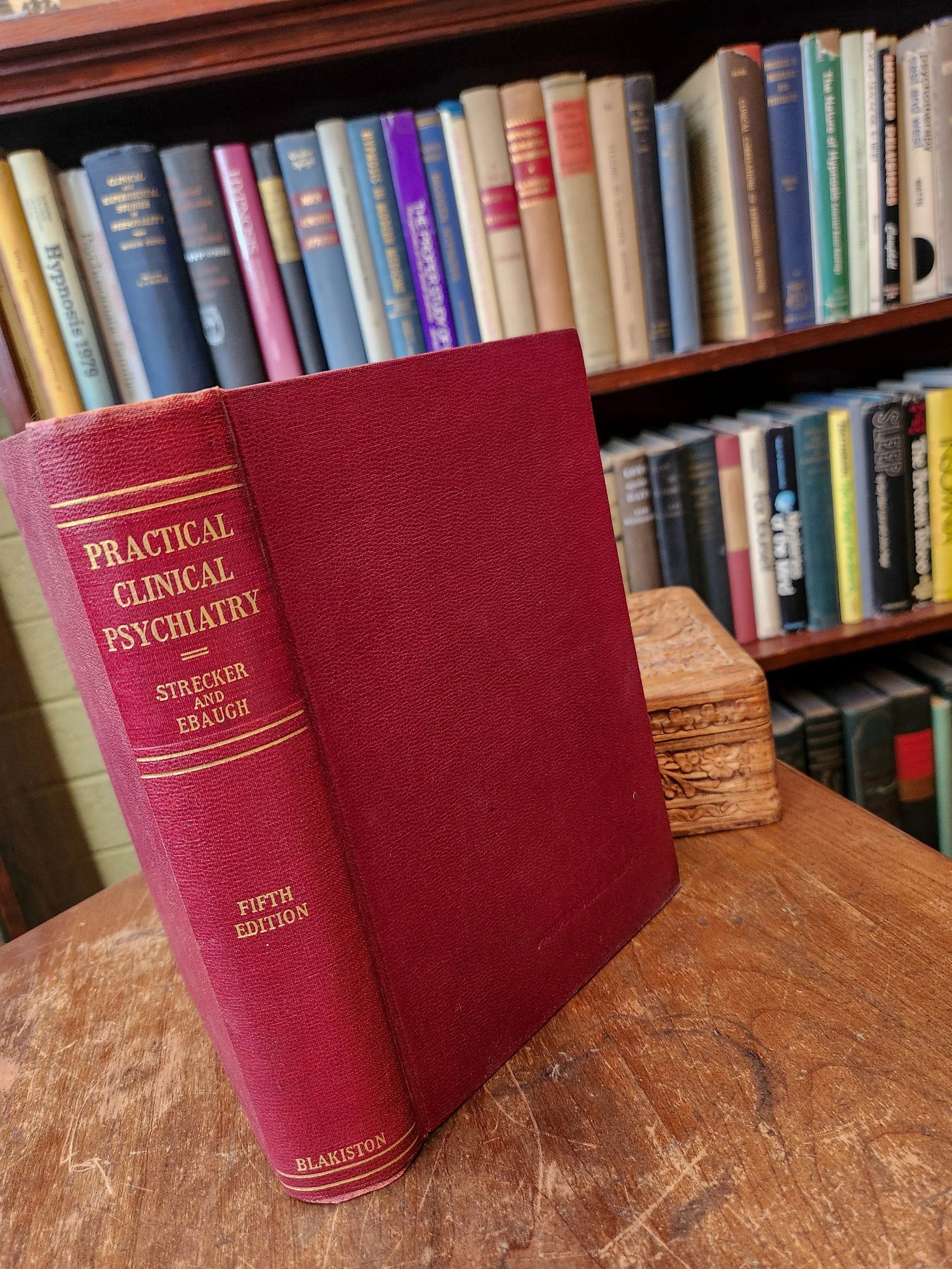
Milton Erickson’s copy of “Practical Clinical Psychiatry” at the Erickson Historic Residence. Photo by Sarah Clinebell.
SECTION I: “One of these books must be read completely.”
“Modern Clinical Psychiatry” by A. P. Noyes
“Practical Clinical Psychiatry” by E. A. Strecker and F. G. Ebaugh
“Modern Clinical Psychiatry” emphasizes a psychobiological approach to mental illness: mental disorders arise from interactions between biological, psychological, and social processes. Mental illness results from maladaptive integration of biological & environmental influences [family dynamics, stressful life events and social conditions.] Psychiatry must integrate neurology, psychology, and sociology.
“Practical Clinical Psychiatry” underscores early intervention, prevention and an individualized approach and suggests psychiatry should be integrated with general medicine. Diagnoses should be based on patient history as well as clinical observations, and biological, psychological and social factors.
SECTION II: Any two of the following books must be read completely.
“Psychotherapy in Medical Practice” by M. Levine
“Principles of Abnormal Psychology” by A. H. Maslow and B. Mittlemann
“Borderlands of Psychiatry” by S. Cobb
“Facts and Theories of Psychanalysis” by I. Hendrick
“Psychotherapy in Medical Practice integrates psychotherapy into everyday medical (non-psychiatric) care, emphasizes the doctor–patient relationship and focuses on the psychosomatic. Physicians should use basic psychotherapeutic skills.
“Principles of Abnormal Psychology”gives a broad overview of mental disorders, combining biological, psychological, and social perspectives. It reflects early humanistic ideas, including self-actualization and growth.
“Borderlands of Psychiatry” focuses on the grey areasbetween normality and mental illness and explores stress, life events, and social environment and their impact on mental health.
“Facts and Theories of Psychoanalysis” outlines anexplanation of psychoanalytic theory and covers Freudian concepts: unconscious, drives, defense mechanisms.
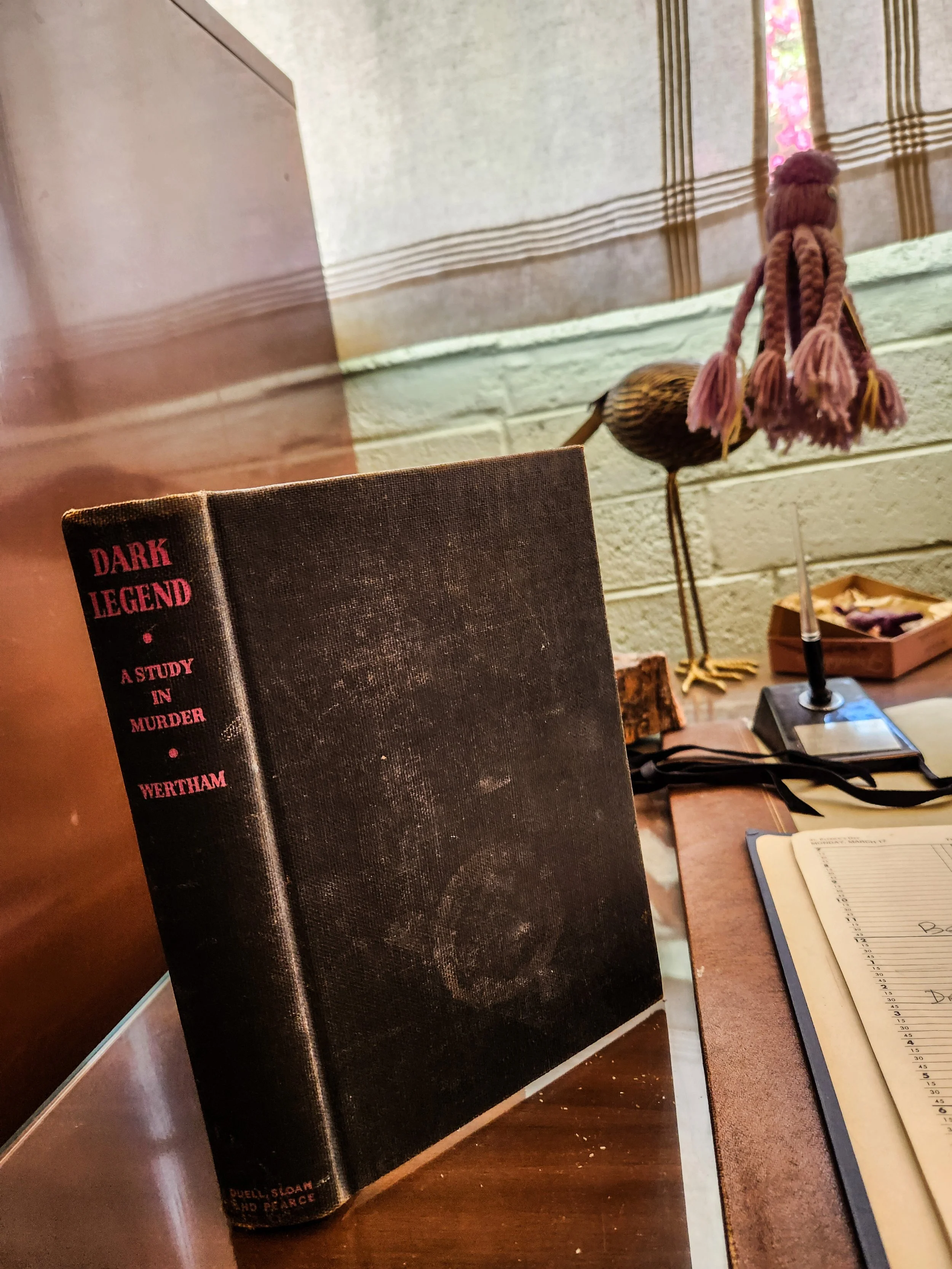
Milton Erickson’s copy of “Dark Legend” at the Erickson Historic Residence. Photo by Sarah Clinebell.
SECTION III: “If these books have not already been read, they must be completed this year.”
“Psychiatry for the Curious” by G. H. Preston
“The Psychology of Insanity” by B. Hart
“Dark Legend” by Fredric Wertham
“Psychiatry for the Curious” explains “major mental disorders, basic diagnostic ideas, and treatment approaches in clear, non-technical language. The text emphasizes curiosity and open-mindedness in understanding human behavior, encouraging readers to see mental illness as understandable rather than mysterious or stigmatized.”
“The Psychology of Insanity” presents early psychological “explanations of mental illness, focusing on how disturbances in thinking, emotion, and perception lead to “insanity.” Hart discusses symptoms such as delusions and hallucinations as meaningful expressions of underlying conflicts. The book aims to make severe mental illness more understandable by linking symptoms to psychological processes rather than viewing them as purely irrational.”
“Dark Legend” explores the “psychological and social factors behind violent behavior, particularly in youth. Wertham examines how environment, trauma, and cultural influences shape aggressive and antisocial actions. The book discusses the impact of media and society on mental health, arguing that violence is not simply individual pathology but is also influenced by broader social conditions.”
SECTION IV: Other Recommended Books:
Upon Request, one of the following may be substituted for one of the first group.
“Psychosomatic Diagnosis” by F. Dunbar
“The Psychodynamics of Abnormal Behavior” by J. F. Brown
“Psychotherapy” by Paul Shilder
“Common Neuroses of Children and Adults” by C. English and G. H. J . Pearson
“A Handbook of Elementary Psychobiology and Psychiatry” by C. W. Billings
“A Mind That Found Itself” by C. W. Beers
“Psychosomatic Diagnosis” examines how “emotional conflicts and personality patterns contribute to physical illness. Dunbar proposes that certain personality types are associated with specific medical conditions, highlighting the role of stress and unconscious processes in disease development.” Psychological and physical factors should be used in diagnosis and treatment.
“The Psychodynamics of Abnormal Behavior” explores “abnormal behavior through a psychodynamic lens, focusing on unconscious conflicts, early experiences, and emotional development. Maladaptive behaviors arise from unresolved internal struggles and conflict, underlying motivations and defense mechanisms.”
“Psychotherapy” examines the “principles and techniques of psychotherapy, with particular attention to how patients experience themselves and their bodies. Shilder integrates psychoanalytic ideas with broader psychological perspectives, emphasizing the therapeutic relationship and the role of self-perception in mental health. The text highlights how therapy can help individuals reorganize their sense of self and improve functioning.”
“Common Neuroses of Children and Adults” examines “common neurotic disorders such as anxiety, phobias, and obsessive behaviors and explores how these conditions develop, often linking them to emotional conflicts and developmental issues.”
“A Handbook of Elementary Psychobiology and Psychiatry” discusses the “biological foundations of behavior and their connection to psychiatric conditions. The book explains how brain function, nervous system processes, and physiological factors influence mental health.”
“A Mind That Found Itself” is an autobiographical work recounting Beers’ personal experience with mental illness and institutionalization, describing both his suffering and recovery. He exposes the harsh conditions and mistreatment in early psychiatric hospitals while advocating for more humane care. The book “combines personal narrative with social critique, ultimately calling for reform in mental health treatment.”
Photographs by Sarah Clinebell, Archives Manager, with additional images supplied from the Milton H. Erickson Foundation Archives.
Book summaries and key points were developed using AI generated content.
You may also like …

Personal Perspectives
by Jeffrey Zeig
An Epic Life Vol. II is the second biography on Milton H. Erickson written by Jeffrey Zeig. The first volume features professional perspectives on Erickson and this book offers a personal lens, as seen through Erickson’s family, friends, neighbors, students, secretaries, and patients. The reader gains access into the dynamic personal world of Milton Erickson, who was a one-of-a-kind communicator of unparalleled brilliance.
Erickson was known to work with patients to elicit in them the innate ability to “connect the dots” to discover their adaptive potentials. Readers will delight in also being able to connect the dots, piecing together the professional aspects of Erickson in the first volume with the personal ones in this volume. For Erickson, the line between his professional life and personal life was blurred. He was doctor, teacher, friend, and neighbor all at the same time. Readers will see how his therapy methods carried over into his personal life. Or was it perhaps the other way around?
An Epic Life II draws upon decades of interviews with those who knew Erickson on a more personal level. The incisive perspectives are interlaced with commentary from Zeig to clarify and contextualize. The images of Erickson that emerge are congruent, divergent, and myriad. In the end, readers will have a more complete picture of the man, his commitment, and his work. There is nothing simple in what is conveyed, and yet the impression it makes is coherent – and lasting.
Zeig prepares us for this stimulating journey by providing a comprehensive history of Erickson’s lineage, and background on the many contexts mentioned in the book.
Erickson was one of the greatest psychotherapists of the 20th century and the father of modern hypnosis and brief therapy. His professional contributions continue to influence the field and its practitioners and his personal life is inspirational.
As we strive to evolve personally and professionally, we should do as Erickson did: Leave the world a better place.

Personal Perspectives
by Jeffrey Zeig
Type: eBook
Format: .epub
An Epic Life Vol. II is the second biography on Milton H. Erickson written by Jeffrey Zeig. The first volume features professional perspectives on Erickson and this book offers a personal lens, as seen through Erickson’s family, friends, neighbors, students, secretaries, and patients. The reader gains access into the dynamic personal world of Milton Erickson, who was a one-of-a-kind communicator of unparalleled brilliance.
Erickson was known to work with patients to elicit in them the innate ability to “connect the dots” to discover their adaptive potentials. Readers will delight in also being able to connect the dots, piecing together the professional aspects of Erickson in the first volume with the personal ones in this volume. For Erickson, the line between his professional life and personal life was blurred. He was doctor, teacher, friend, and neighbor all at the same time. Readers will see how his therapy methods carried over into his personal life. Or was it perhaps the other way around?
An Epic Life II draws upon decades of interviews with those who knew Erickson on a more personal level. The incisive perspectives are interlaced with commentary from Zeig to clarify and contextualize. The images of Erickson that emerge are congruent, divergent, and myriad. In the end, readers will have a more complete picture of the man, his commitment, and his work. There is nothing simple in what is conveyed, and yet the impression it makes is coherent – and lasting.
Zeig prepares us for this stimulating journey by providing a comprehensive history of Erickson’s lineage, and background on the many contexts mentioned in the book.
Erickson was one of the greatest psychotherapists of the 20th century and the father of modern hypnosis and brief therapy. His professional contributions continue to influence the field and its practitioners and his personal life is inspirational.
As we strive to evolve personally and professionally, we should do as Erickson did: Leave the world a better place.
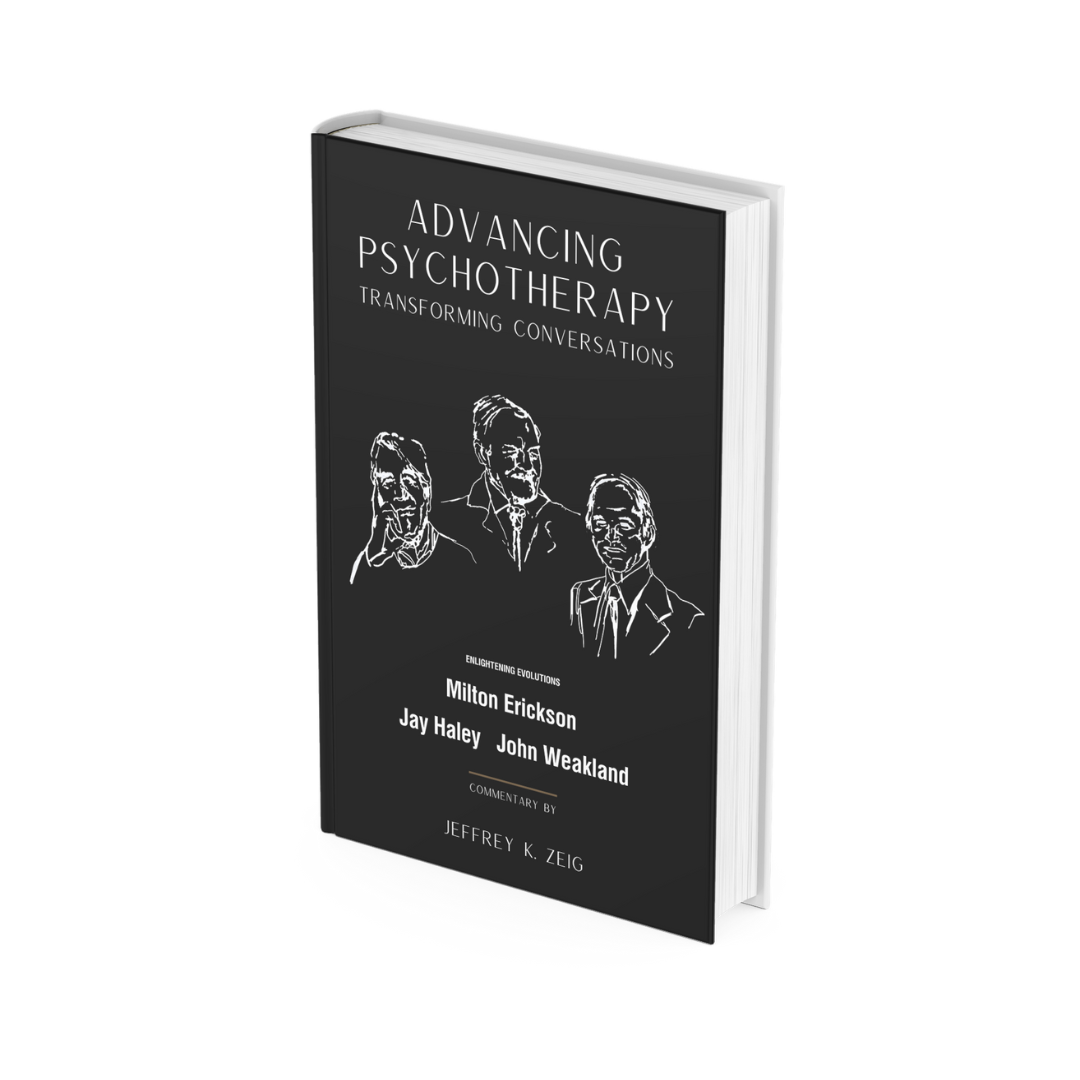
Transforming Conversations
by Jeffrey Zeig
Type: Softcover
When great minds meet, we are privileged to learn from their explorations…
As part of a communications project conducted in the mid-1950s and spearheaded by anthropologist Gregory Bateson, Jay Haley, and John Weakland went to Phoenix, Arizona to learn from and collaborate with Milton Erickson.
The meetings of these three great minds were recorded. Their explorations together both advanced the Bateson Project’s Double Bind Theory and helped to develop more effective approaches in psychotherapy.
Advancing Psychotherapy is a glimpse into an important time in the history of the field and a rare opportunity to learn from those who shaped the future of psychotherapy. Its content will improve your practice of psychotherapy.

Colleague Extraordinaire, Wife, Mother and Companion
by Marilia Baker, MSW
Type: Softcover
This portrait of Milton Erickson’s wife reveals her unique contributions to his work, as well as her own productive life. The author follows the tapestry of Elizabeth’s life, beginning with childhood, the circus, and the first moment of courtship, when Milton spotted Elizabeth as he looked out the window. Then and there he declared with certainty that he was going to marry her! The chapters interweave Elizabeth’s varied roles, as psychology student, author, editor, proofreader, hypnotic subject, wife, hostess and mother. She worked alongside her husband at the dining room table to help produce the American Journal of Clinical Hypnosis and facilitate the comfort of many patients who Dr. Erickson treated in their living room. Includes a special family photo album, a foreword by Roxanna Erickson-Klein and Betty Alice Erickson, and a collection of articles by Elizabeth Moore Erickson.
