

July Video of the Month

Timeless Presentations from Erickson Foundation Events
This ongoing series highlights keynotes, workshops, and dialogues from past Erickson Foundation conferences, showcasing influential voices in psychotherapy. These archival recordings offer more than historical interest; they hold lasting clinical value. Each session distills complex clinical ideas into lived examples, practical insight, and enduring therapeutic relevance.
This month’s selection is…
✨ Lilian Borges, MA
“Experiential Therapy: Integrating Therapist Sculpting and Hypnosis”
Clinical Demonstration | International Congress 2015 | Phoenix, AZ

In this clinical demonstration, Lilian Borges shows how experiential therapy and hypnosis can be woven together in a live therapeutic encounter. Working with a volunteer, she begins with a specific relational concern and gradually transforms it into a memorable and transformative experience. For therapists it is a helpful lesson in pacing, attunement, body-based inquiry, metaphor, resource development, and therapeutic responsiveness.
📌 About the Speaker
Lilian Borges, MA, is a psychotherapist, educator, and trainer known for her experiential and Ericksonian approach to psychotherapy. Her clinical presence is warm, active, and highly responsive, with careful attention to what the client is experiencing in the moment.
🧠 Session Highlights
Making Inner Experience Visible
Borges begins by asking the client what she wants to be different in her relationship with her younger sister. Borges then invites the client to notice the physical sensation connected to the problem: a heavy, sick feeling in the stomach. From there, she asks the client to use imagination and “take that energy/feeling out of your body” so Borges can become a sculpted representation of it. This simple shift externalizes the problem and gives both therapist and client a concrete image to work with.
Therapist Sculpting as Experiential Empathy
The heart of the demonstration is Borges’ use of therapist sculpting. She asks the client to shape her body as though Borges were “a piece of clay,” first representing deep sadness and then the heaviness of burden. Borges notices what she feels as she takes on the position, offers tentative reflections, and checks them against the client’s experience. Her teaching later clarifies that she understands this as a form of experiential empathy: using resonance, body awareness, and clinical intuition to gather information while still distinguishing the client’s experience from her own.
From Burden to Resource
As the demonstration unfolds, the client names a progression of states: sadness, burden, permission to be happy, freedom, and eventually the image of two sisters skipping together. Borges helps the client move from a problem image, heavy and nauseating, toward a resource image that is light, playful, and embodied. When the client questions or resists a suggestion, Borges slows down, adjusts course, and returns to the client’s actual experience.
Hypnosis as Integration
Borges uses hypnosis here to deepen and integrate the experiential work. After the problem has been brought into awareness and externalized, she invites the client to breathe into the sensation, release what belongs to family pain or family lineage, and bring in what she calls the “higher self” or “soul.” The hypnotic work helps the client reconnect with an earlier part of herself and discover a felt sense of freedom, movement, and permission to be happy.
A Responsive Clinical Style
One of the most useful parts of the demonstration is Borges’ flexibility. She has a plan, but she is not rigid. When the client says that taking on the sister’s role would undo the work, Borges immediately changes direction. When a suggestion does not fit the client’s lived experience, Borges acknowledges it and searches for language that does. This makes the demonstration a strong example of active, directive therapy that remains deeply collaborative.
✅ Notable Clinical Takeaways
Begin with a concrete desired outcome, not only a description of the problem.
Track bodily sensations and ask clients to locate emotional experience in the body.
Externalize problem states so clients can see, name, and relate to them differently.
Use therapist sculpting to create memorable images of both problem states and resource states.
Offer tentative reflections rather than interpretations; Borges repeatedly checks whether what she senses fits the client’s experience.
Bring resources into the present moment, then help the client anchor them through image, movement, and feeling.
Adapt the intervention when the client signals that a direction does not feel safe or useful.
Use hypnosis to integrate the experiential work, release what does not belong to the client, and strengthen a new internal alignment.
🧩 Ericksonian Resonances
Although Borges presents the demonstration in her own experiential language, the Ericksonian resonances are clear. She follows the client’s experience closely, uses the client’s own metaphors, works through indirect suggestion, and looks for resources already present in the client. Rather than explaining change abstractly, she creates conditions in which the client can experience change in the body, imagination, and relationship.
The demonstration also reflects an Ericksonian emphasis on utilization. Borges uses what emerges: the client’s sensation of heaviness, the image of pregnancy, the language of burden, the spontaneous smile, the desire to move, and finally the image of skipping. Each becomes part of the therapeutic path. The work is individualized, experiential, and oriented toward possibility.
⏳ In Closing
For therapists interested in experiential, Ericksonian, body-based, or integrative approaches, this demonstration offers a practical model for working with emotion as something that can be felt, externalized, transformed, and anchored in a new way. It is a vivid example of therapy as a lived, shared experience.
📍 Continuing the Learning
For clinicians interested in continuing this kind of case-based learning, Lilian Borges will also be conducting a Case Consultation class for The Milton H. Erickson Foundation later this year. Details are still forthcoming.
Click here to watch the video.
You may also like …
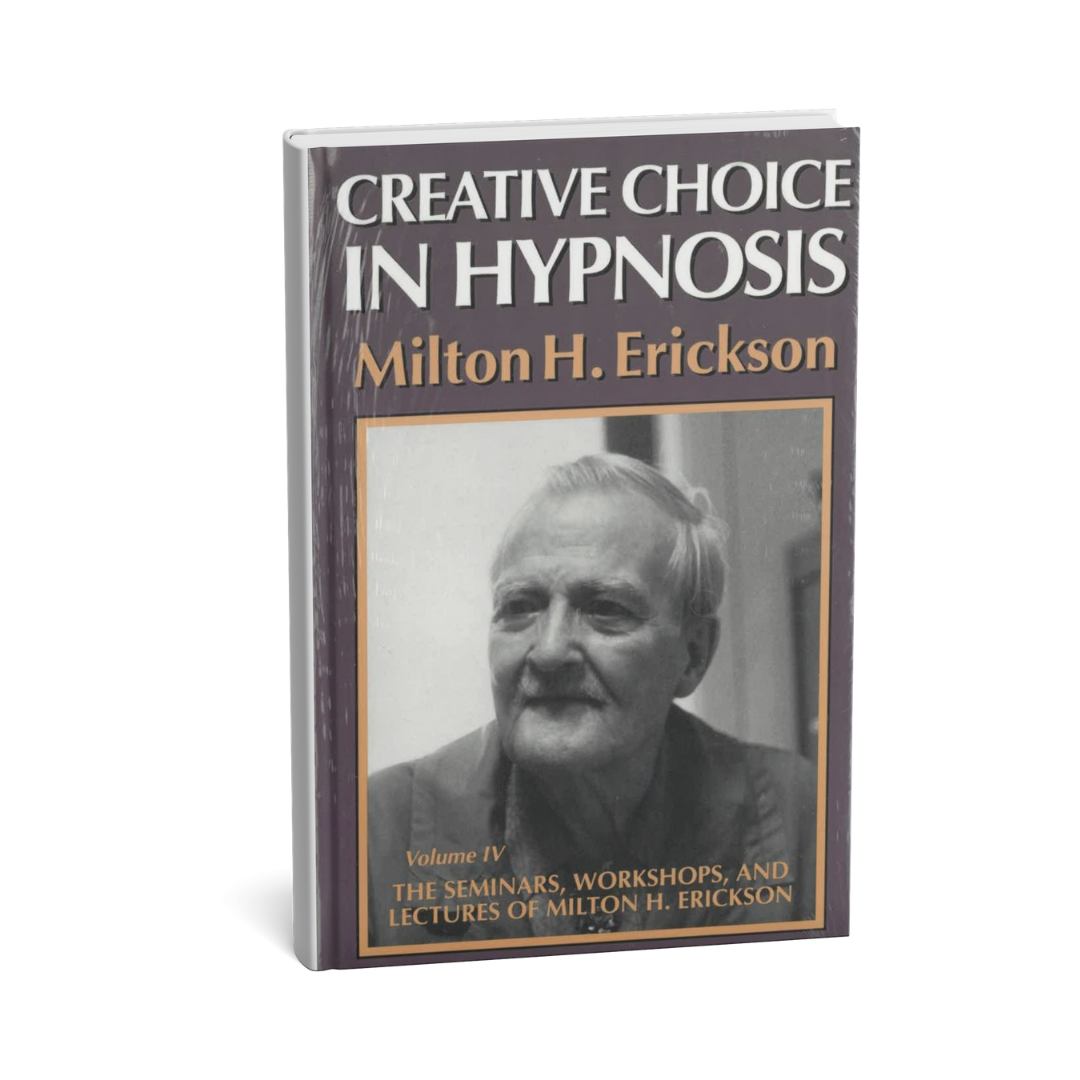
The Seminars, Workshops, and Lectures of Milton H. Erickson - Volume 4
by Milton H. Erickson
edited by Ernest L. Rossi and Margaret O. Ryan
Rating of 4

by Jeffrey Zeig, Ph.D.
Type: Softcover
The first volume of the series, The Induction of Hypnosis, presented Dr. Zeig’s model of hypnosis.
The Anatomy of Experiential Impact is the second volume of the Empowering Experiential Therapy Series, and can be read independently of the other books in the set.
The third, Psychoaerobics, presented an experiential method of therapist development. In this book, you will encounter a model of brief therapy that can be applied independent of your preferred model of therapy.
The fourth book in the series, Evocation, continues an exploration that began decades ago as he sought to trace the nuances and applications of Milton Erickson’s extraordinary work. Turning here to the original masters of evocative communication — painters, composers, filmmakers, poets, choreographers — he demystifies the grammar of the artist’s expression, teaching readers how to use it to enhance and empower their therapeutic communication.

by David Keith
Type: Softcover
Carl Whitaker was one of the most influential family therapists of the 20th century. He had his loyal following, including David Keith. He also had critics, such as one therapist who shortly after Whitaker’s death in 1995 called him a Crazyman. Not far from the truth Keith would say, though he defines Crazyman this way: a full-fledged human being: thoughtful, imaginative, down-to-earth, curious, spiritual, smart, playful, inconsistent, tough, tender, ironic, supportive, rebellious, self deprecating, loving, and generous.
Whitaker was a longtime friend, teacher, mentor, co-therapist and collaborator. Their connection lasted 33 years. Whitaker embodied therapeusis, that elusive complex, energetic, and abstract core of psychotherapy. And with this book, Keith calls for a higher order — the reinvigorating of clinical minds in accord with therapeusis. He proposes that therapists listening be more nuanced, and that they playfully and energetically use language in all its forms irony, syntax, metaphor, etc. rather than relying solely on evidence-based methods. Irony, especially, commands Keith s full attention because overregulation he suggests leads to squelched spirits, impaired by irony deficiency.
Keith champions semiotics, offering an analogy of a forest: alive, recycling, blossoming, growing, consuming. If not for the heartless Empire of Overregulation with its lifeless language of business-eze, bureaucracy, and bottom-lines, therapists could more freely pursue their passion for truly helping others. Carl Whitaker took giant steps in this direction, and David Keith continues making the case. Like a marathon runner, Keith has taken up the torch of therapeutic freedom, adding essential perspectives to the real meaning of caring for patients. This is an endlessly rich and creative process in which patients may actually be guided to greater well-being and therapists may avoid the pitfalls of burnout and resignation.

A Guide for the Creative Pragmatist
by Rob Fisher
Type: Softcover
Ever read a book or attended a workshop and thought that the ideas were great, but then were lost when you tried to apply them yourself? This phenomenon seems to be particularly common in the field of psychotherapy. The charisma effect: when the words sound convincing and the teacher teaches well, but the concepts disintegrate in practice.
Well, now Rob Fisher steps forward with a new book entitled Experiential Psychotherapy with Couples: A Guide for the Creative Pragmatist, in which he not only describes the approach, he explains step by step how to put it into action. Depth and brevity are the two guideposts of the writing, and ample case material and innovative exercises clarify the experiential techniques presented as well as their underlying principles. Fisher’s approach helps to move clients (and therapists) from insight to impact as it uncovers opportunities to access and then shift the couple’s negative interactive impulses – by engaging them thoughtfully rather than denying their purpose — toward creating a more satisfying and balanced relationship.
For therapists of any discipline, this book offers practical ways both to understand and to intervene with couples across several dimensions simultaneously. Since issues exist on many levels, so too should therapy if it is to be truly effective and enduring. Rob Fisher’s goal? For readers not only to find the book “interesting,” but for them to be able to customize and employ what they learn within their own clinical practice.
Rob Fisher has performed the delicate task of integrating classical theories & techniques of couples psychotherapy with such important innovations as non-violence, mindfulness, and bodymind holism. His advocacy of freeing ourselves from character strategies that cripple our capacity for relatedness rings true. Using lots of clear clinical examples, he guides the reader through experiential methods of assessing couples problems, and shares experiential means to unravel them. Accessible and imminently usable, this book can be used by therapist and couple alike to plumb the depths of relational intimacy. I plan on assigning it to both my students and clients. Christine Caldwell, Ph.D., LPC Director, Somatic Psychology Department Naropa University Boulder, Colorado author of Getting in Touch: The Guide to New Body-Centered Therapies.
