

Brief Therapy in a Taxi

By, Michael Hoyt, Ph.D. & Michele Ritterman, Ph.D.
Estimated reading time: 2 minutes, 17 seconds.
During the December 2011 International Congress, we took a taxi to visit the Erickson home and on our way had a conversation with our driver. At first, it was pleasant chitchat, but then we engaged on a deeper level and asked the driver how he came to live in Phoenix. He told us about his unhappy divorce–how several years earlier his wife, who he thought was the love of his life, had abandoned him in order to take a job in another state. When he admitted he felt “puzzled and sucker-punched” the atmosphere in the taxi became tense and quiet.
Michele asked the driver if he knew who Lenny Bruce was. He did not. She then told a story in which a waiter in a Chinese restaurant who had served Lenny and his girlfriend for years asked Lenny one night, “Where’s momma?” And the waiter also raved about her. When Lenny replied that she had left him, the waiter said, “Oh, well, you’re better off without her.” Our driver chuckled a bit but said he was still grieving his loss.
As we were driving, we saw Squaw Peak Mountain in the distance. Michele asked our driver if he had ever climbed the mountain and he said, “No.” Sensing he would never do it on his own initiative, she recommended he climb just for the view–an idea he strongly rejected. (In brief therapy, always offer an initial suggestion that can be rejected.)
As we were getting closer to the freeway exit Michelle took advantage of the moment and asked, “Have you heard the one about the taxi driver?”
“No,” our driver predictably answered.
“Well,” she continued, “he was driving along when a cop pulled him over. The taxi driver begged the cop, ‘Please don’t give me a ticket,’ and the cop said, ‘I’ll tell you what, if you can tell me a good story, I’ll let you go.’”
“The taxi driver replied, ‘My wife ran off with a cop. When I saw you, I got scared you were him and you were bringing her back!’”
Now our driver laughed wholeheartedly. The rejection he had felt from his wife switched to his relief. Despite the pain over losing her, he realized that he might not even want her back.
When we got to the Erickson home and Michael was paying the fare, the driver said, “I’m going to remember that story,” and laughed again. Michael smiled and gave him a $10 tip to remember us and the joke.
As Dr. Erickson so wisely taught us, context and sequence are important for a brief intervention to have a maximal chance to take hold.
After a session of brief therapy in a taxi, we visited the Erickson home, and it was lovely.
You may like…

by Michael Hoyt
Type: Softcover
Experiential Psychotherapy with Couples “When it comes to combining scope, clarity, wit, and humanity, Michael Hoyt does it better than anyone. He is brilliant, and Brief Psychotherapies: Principles and Practices may be his best book.” —John Frykman, Ph.D., author of Making the Impossible Difficult and The New Hassle Handbook Brief therapy can be defined succinctly as “Time-sensitive treatment to relieve psychological distress and/or promote growth” or as “The development of a collaborative alliance and an emphasis on patient/client strengths in the service of an efficient attainment of co-created goals.” Nowadays insurance companies, HMOs, counseling centers and consumers all desire—and often require—brief treatment for psychological problems. Specific skills and orientation are needed to meet the challenge of providing high-quality professional services in today’s economic and healthcare environment.
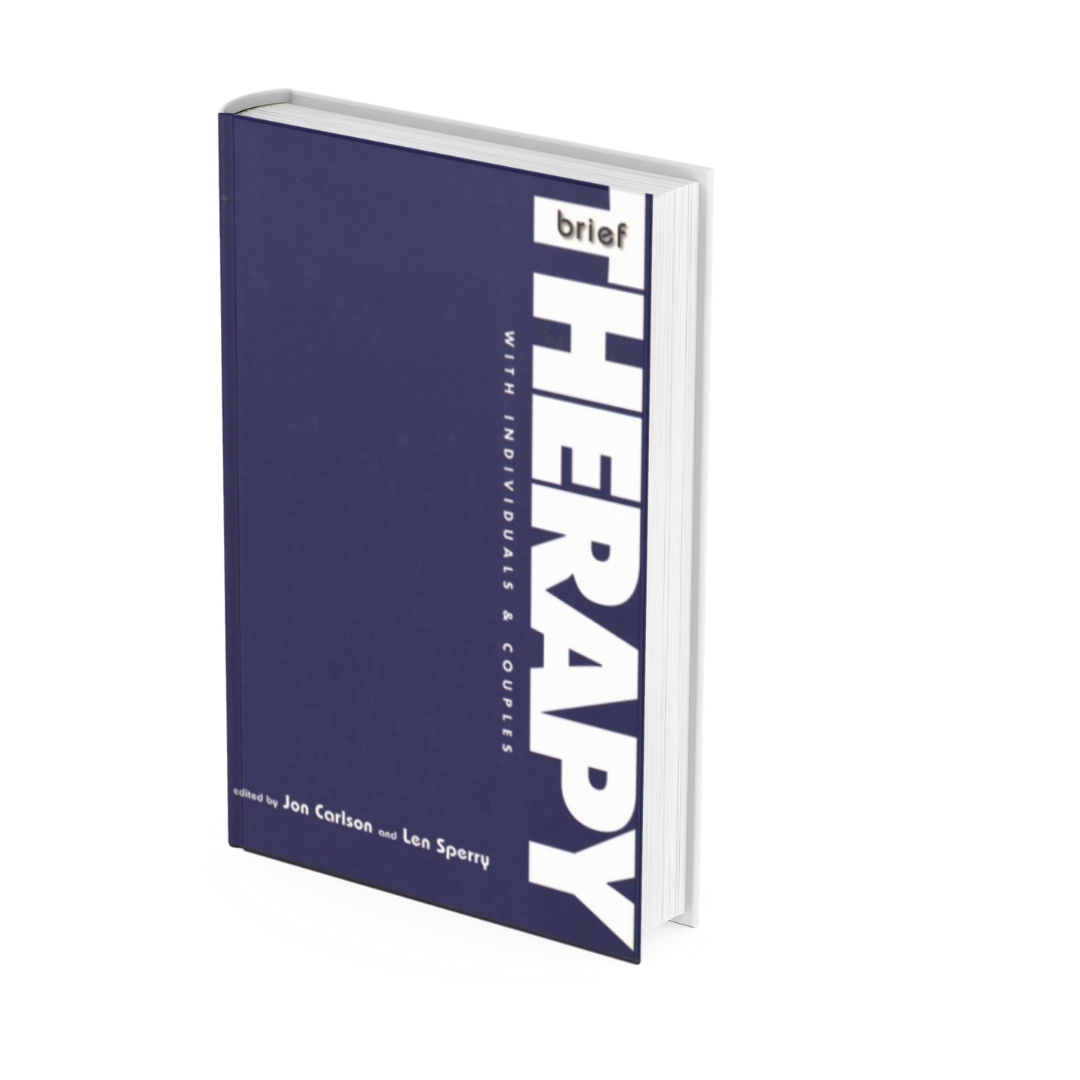
by Jon Carlson and Len Sperry
Type: Hardcover
More than 100 books on brief therapy have been published in the past decade. . . . Although the number of publications is remarkable, their clinical utility has generally not been all that remarkable. Ironically, some of the longest books on brief therapy do little more than ponderously review theories of [brief therapy], while the very short books say little more than that brief therapy has great promise and applicability. Few offer much information or guidance about actually doing brief therapy, about actually applying its stategies in day-to-day clinical practice with adults.
–From the Editors’ Introduction
Now, setting a new standard for publishing in the area of brief therapy, there’s Brief Therapy Strategies with Individuals and Couples, a sourcebook that brings together in a single place all the most effective strategies and interventions–across orientations–for time-effective treatment of individuals and couples. Each strategy is carefully described and then clearly illustrated with clinical case materials.
The chapter authors include 20 of today’s leaders in the field of brief therapy–Frank Dattilio, Michael Hoyt, Luciano L’Abate, Arnold Lazarus, Wade Luquet, Leigh McCullough, Scott Miller, and David Scharff among them.
Unique both in its scope and its clear clinical focus, Brief Therapy Strategies with Individuals and Couples will prove an invaluable resource for all clinicians seeking to maximize not just their clients’ time, but also their own. Readers across the field will benefit from Carlson and Sperry’s decision to gather and distill the best treatment strategies across orientations–cognitive-behavioral, multimodal, constructivist, Ericksonian, psychodynamic, psychoeducational, and pharmacological–into a single, well-organized, case-filled volume.
Critical Acclaim
This groundbreaking book addresses a major need of almost all practicing therapists: efficacious brief therapy. Representing a wide range of counseling perspectives, the contributors to the book explain, with the help of familiar clients, how therapy can be shortened using their particular approach. The value of this book is in its clarity and detail. Practitioners may select practices that are compatible with their own beliefs and immediately put them to use in their offices. If you are in practice, this is a book you should not miss.
–William Glasser, M.D.
Author of Reality Therapy in Action