

May Video of the Month
For National Mental Health Month: What Is a Healthy Mind?
Timeless Presentations from Erickson Foundation Events
This ongoing series highlights keynotes, workshops, and dialogues from past Erickson Foundation conferences, showcasing influential voices in psychotherapy. These archival recordings offer more than historical interest; they hold lasting clinical value. Each session distills complex ideas into lived examples, practical insight, and enduring therapeutic relevance.
This month’s selection is…
✨ Daniel Siegel, MD
“Mindfulness, Mindsight, and the Brain: What Is Mind and Mental Health?”
Invited Workshop | Evolution of Psychotherapy Conference 2013
May is National Mental Health Month, making Daniel Siegel’s 2013 workshop a fitting selection. Siegel explores an often-overlooked question: what do we really mean by “mind” and “mental health”?
📌 About the Speaker
Daniel J. Siegel, MD, is a psychiatrist, author, educator, and major voice in the field of interpersonal neurobiology. His work integrates attachment research, neuroscience, mindfulness, developmental psychology, and psychotherapy, with a particular focus on how relationships and reflective awareness shape the brain and support well-being. He is widely known for books such as Mindsight, The Developing Mind, The Mindful Therapist, and Brainstorm, as well as for practical teaching tools that make complex brain science accessible to clinicians, parents, educators, and the public.
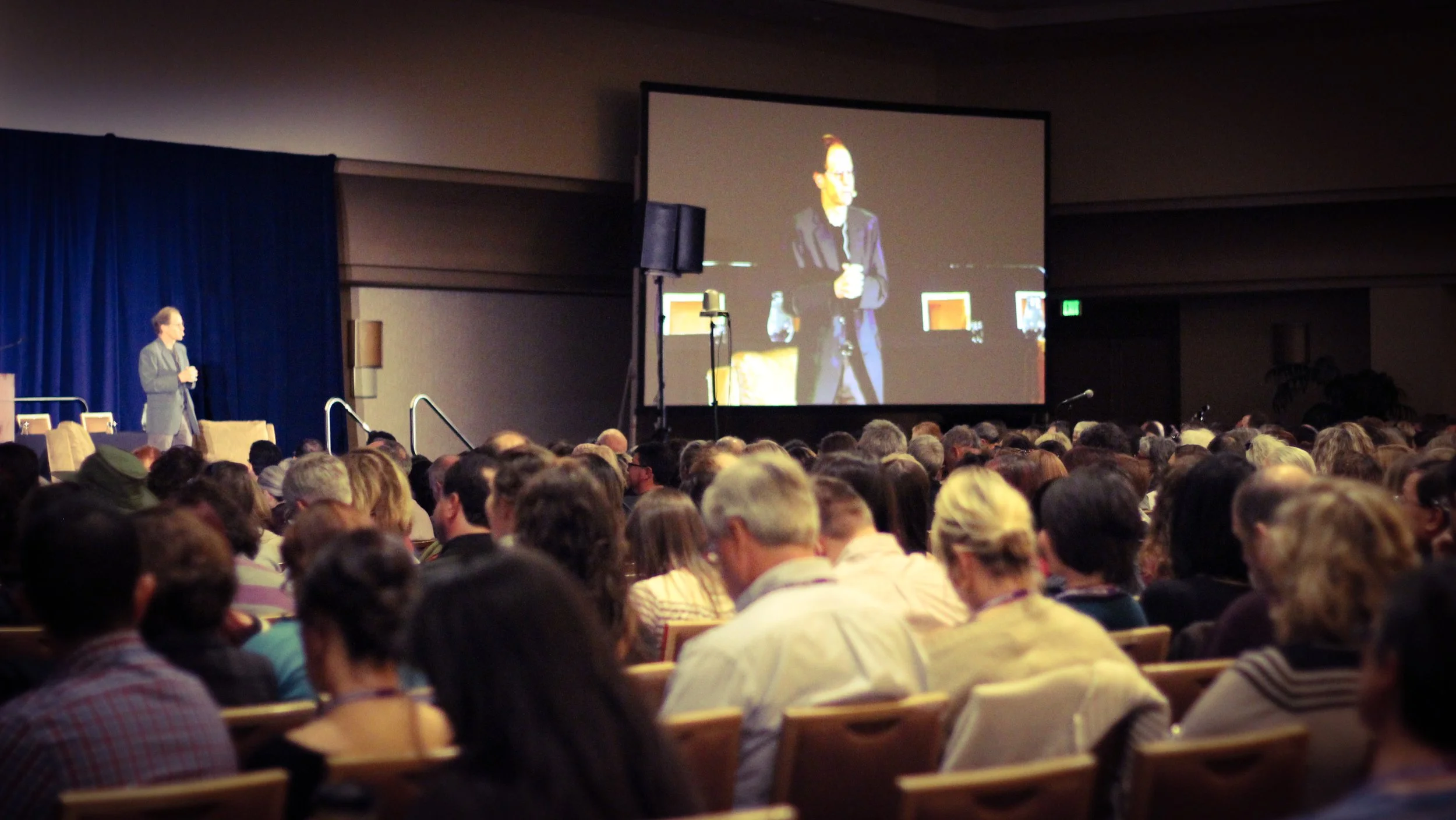
Daniel Siegel, 2013 Evolution of Psychotherapy Conference, Anaheim CA from The Milton H. Erickson Foundation Archives
🧠 Session Highlights
Defining the Mind Before Treating It
Siegel opens by asking the audience how many were formally taught a definition of the mind during their professional training. Very few hands go up. That moment becomes the foundation for the workshop. If psychotherapy is, literally, a therapy of the psyche or mind, then clinicians need more than intuition, tradition, or reductionistic claims that “the mind is just what the brain does.” Siegel invites therapists to consider the mind through several interwoven dimensions: subjective experience, consciousness, and the flow of energy and information within and between people.
Subjective Experience and “Feeling Felt”
A central thread of the workshop is Siegel’s insistence that subjective experience matters. Feelings, images, sensations, thoughts, memories, beliefs, intentions, and meanings are not side issues in therapy; they are the living material of the work. He illustrates this through the language of attunement and the experience of “feeling felt,” describing how healing relationships honor the inner world rather than reducing people to behavior, symptoms, or neural activity.
Mindsight as a Clinical Capacity
Siegel uses the term “mindsight” to describe the capacity to perceive the mind…in oneself and in others. In the workshop, this includes insight, empathy, and integration. Clinically, mindsight helps clients develop a more stable and flexible relationship with their own experience. It also helps clinicians distinguish between merging with a client’s pain via empathy and understanding the client’s experience via compassion. This distinction becomes especially important in trauma work, where empathy should exist but not overwhelm the therapist.
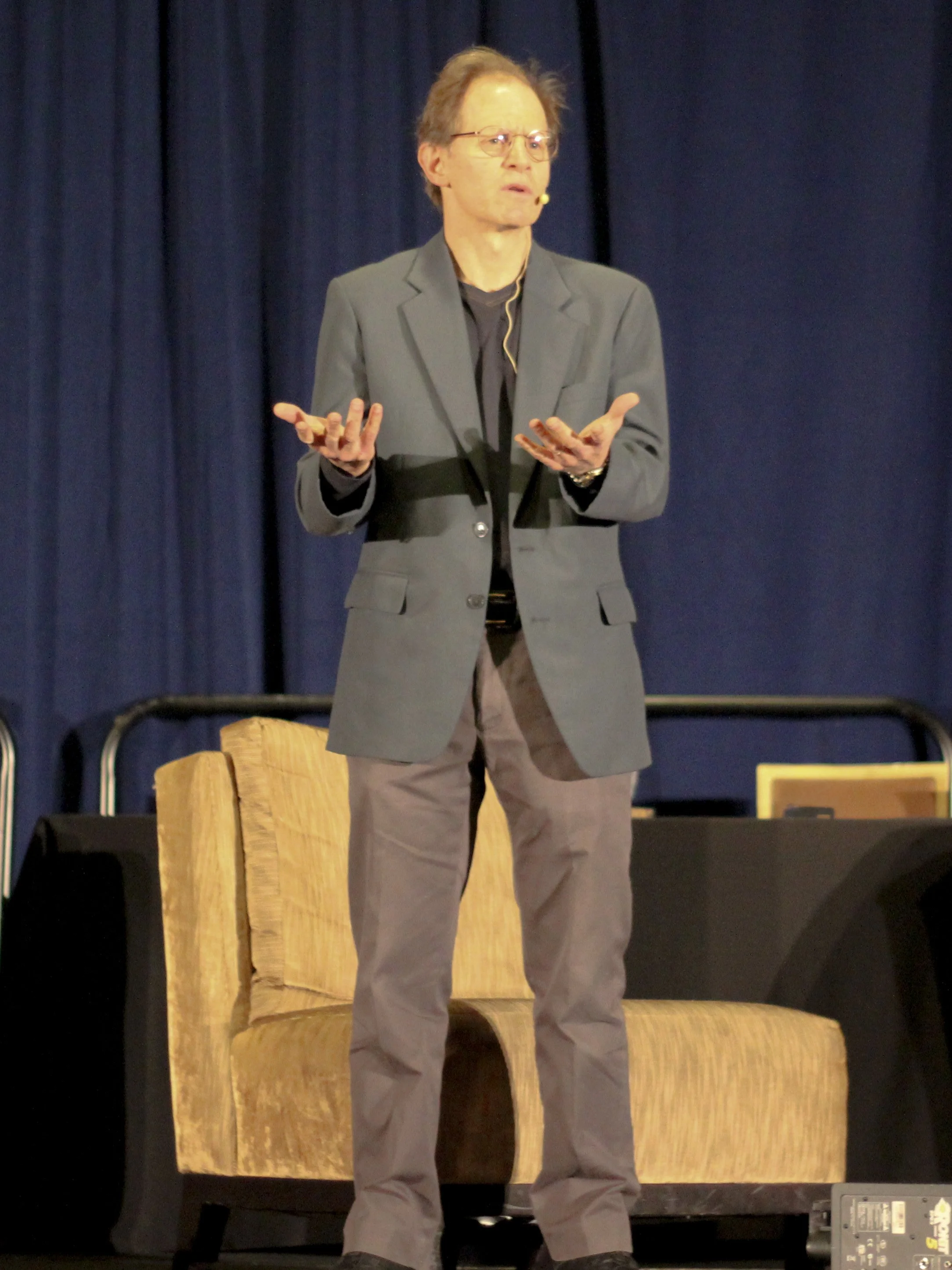
Daniel Siegel, 2013 Evolution of Psychotherapy Conference, Anaheim CA from The Milton H. Erickson Foundation Archives
The Brain as a Tool for Self-Regulation
One of the most accessible parts of the workshop is Siegel’s “hand model of the brain,” which he uses to explain the brainstem, limbic system, cortex, and prefrontal regions in a way that clients and families can understand. Siegel shows how basic knowledge of the brain can empower people to recognize reactive states, pause, and move toward more receptive, regulated states. His language is practical and memorable: once people understand what is happening, they can move from “it’s my fault” to “it’s my responsibility.”
Integration: From Chaos and Rigidity Toward Harmony
The workshop’s most important clinical theme is integration. Siegel defines integration as the linkage of differentiated parts. When differentiation or linkage is impaired, systems tend toward chaos or rigidity, or both. When integration is strengthened, the system becomes more Flexible, Adaptive, Coherent, Energized, and Stable…what Siegel calls FACES flow. In this frame, mental health is not simply the absence of distress…it is the movement toward harmony; which is a mind and nervous system able to coordinate emotion, attention, thought, behavior, memory, and relationships.
An Embodied and Relational View of Mental Health
Siegel’s definition of mind is deliberately larger than the skull and skin. He describes mind as embodied and relational: something that emerges through the body and through relationships. This is one reason the workshop feels especially appropriate for National Mental Health Month. It reminds us that mental health is not only private and internal. It is also shaped by connection, attunement, culture, community, and quality of relationships.
🌀 Ericksonian Threads in Siegel’s Work
Siegel is not presenting an Ericksonian model, but several aspects of the workshop will feel familiar to Ericksonian clinicians. He teaches through stories, demonstrations, humor, imagery, and experiential learning. His “hand model” turns neuroscience into a simple, embodied metaphor that clients can immediately use. His “no/yes” exercise lets participants feel the difference between threat and receptivity before he explains it conceptually. This sequence of experience first and explanation second is highly compatible with Ericksonian teaching and therapy.
The workshop reflects another principle familiar to Ericksonian clinicians: utilization. Siegel repeatedly begins with what is already present in the client’s experience, including sensations, images, feelings, thoughts, relational patterns, and even symptoms of chaos or rigidity. These become material the therapist can work with, offering clues about how the person is organized and where new integration may begin.
Siegel’s emphasis on attunement, timing, indirect learning, and self-organization also resonates with Erickson’s focus on adaptive resources. In Siegel’s framing, change is not something handed to a passive patient. It develops through awareness, relationship, and experience, as new patterns begin to take shape.
🎥 Watch the Moment
At this point in the workshop, Siegel is discussing the brainstem and its connection to reactive states such as fight, flight, freeze, and faint. Rather than leaving the concept abstract, he invites the audience into a brief exercise designed to help them notice their own internal states.
After this clip, Siegel asks the audience to name what they noticed. Their responses help him distinguish between two broad states: reactivity, reflected in the tension, constriction, fear, or defensiveness many participants describe during the repeated “no”; and receptivity, reflected in the ease, openness, comfort, or acceptance many describe during the repeated “yes.” In regard to the hand exercise, he notes that most participants find one hand position more comforting than the other, and muses that figuring out why some people prefer one position over the other would make a good PhD topic. From there he continues discussion, using the exercises as a concrete entry point into his larger assessment of self-regulation.
🌿 A Closing Reflection
This workshop gives viewers a chance to slow down with two familiar words: “mind” and “mental health.” For Siegel, the two appear inseparable: to talk about mental health, we first have to ask what the mind is. He describes the mind through subjective experience, awareness, the body, and relationships, then connects mental health to the integration of those dimensions. In this view, a healthy mind is one that can move away from chaos or rigidity and toward greater flexibility, connection, and responsiveness.
Watch This Month’s Selection Here.
You may also like …

Zerka Moreno (2000) emphasizes the importance of spontaneity and creativity while demonstrating with Christi, who is asked to see her family photo and then construct it on stage using volunteers from the audience. These volunteers act as “auxiliary egos.” Following this demonstration Moreno plays all of the characters in a role reversal she did with her 3 year-old son.
Educational Objectives:
Given a case, illustrate two ways psychodrama can be used as a treatment modality.
Given a case, show how role reversal can provide new understanding of a situation.

Adjusting The Therapy Not The Person
Scott D. Miller, Ph.D., is a therapist, trainer, and lecturer on solution-focused brief therapy. A co-founder of the Institute for the Study of Therapeutic Change in Chicago, he specializes in treating the homeless mentally ill and other underserved populations. He lectures widely and is the author or coauthor of numerous publications, including Psychotherapy with Impossible Cases (1997) and the forthcoming The Heart and Soul of Change: Common Factors in the Human Services.
For information on other Scott Miller books and videos, see the Talking Cure website. Dedicated to studying therapeutic change, each quarter talkingcure.com reviews the research literature and posts information on “what works” in treatment. There is no cost for using this site.
Rejecting all pathologizing diagnostic labels, and turning traditional notions of what therapy is on their heads, Scott Miller shows viewers how to create a therapeutic relationship in which new stories about clients’ strengths can emerge. Raising fascinating questions about how change occurs, and the therapist’s role in that endeavor, this video will be important viewing for newcomers to the field as well as more seasoned practitioners.

Here’s the premise: A relationship is an ongoing process of co-creation, for better or for worse. This important videotape takes this essential concept and shows couples how to put it into action – for better.
Working with real couples, Dr. Stuart demonstrates a series of exercises he has developed to help them clarify areas of discord and to acknowledge common ground. By delineating pockets of responsibility and forging a greater understanding of oneself and one’s partner, the process – and the promise – of co-creating begins to unfold.
Words such as “acceptance,” “caring,” and others that we associate with positive relationships are often just wish-words, that is, they don’t have meaning in our day-to-day lives. But the activities presented here will help couples to take these words and make them ways.
Co-Creating a Positive Relationship unlocks new opportunities for working as partners to build a more flexible, responsive and stimulating life together.

Tapping The Client's Natural Resources
Bradford Keeney, Ph.D., has taught therapy throughout the world for over 20 years. He has been associated with the Ackerman Institute for the Family, the Philadelphia Child Guidance Clinic, and The Menninger Foundation, and has been the director of several family therapy doctoral programs. His books, Aesthetics of Change, Mind in Therapy, and Improvisational Therapy, have been translated into numerous languages. A scholar of diverse cultural healing traditions, Dr. Keeney is also a jazz pianist and improvisational performer.
She’s hyperresponsible; her husband is shamelessly irresponsible. He drinks too much; she overeats. Combining acute listening skills with a winning sense of play, Keeney shows how to zero in on his client’s unique resources and abilities to help her get her marriage back on track.
