

February Video of the Month
Timeless Presentations from Erickson Foundation Events

This ongoing series highlights keynotes, workshops, and dialogues from past Erickson Foundation conferences—showcasing influential voices in psychotherapy. These archival recordings offer more than historical interest; they hold lasting clinical value. Each session distills complex therapeutic ideas into lived examples, practical interventions, and bold clinical positioning.
This month’s selection is…
💞 Terry Real, LICSW
“Love in the 21st Century”
Couples Conference 2013 | Manhattan Beach, CA
📌 About the Speaker
Terry Real, LICSW, is an internationally recognized family therapist, author, and founder of the Relational Life Institute. Known for his direct, unapologetic style, Real has spent decades working with couples “at marital death’s door.” His model, Relational Life Therapy (RLT), asks therapists to confront destructive patterns head-on while strongly advocating for connection, accountability, and mutual empowerment.
🧠 Keynote Highlights: From Companionable Marriage to Fierce Intimacy
In this 2013 keynote from the Couples Conference in Manhattan Beach, Terry Real challenges therapists to recognize that many of the conflicts we see in our offices are rooted in changing relational norms.
Real begins with a provocative cultural observation: women’s roles have transformed dramatically over the past century. As a result, the expectations placed on marriage have changed. However, men’s roles have not shifted at the same pace.
In previous generations, marriage was often “companionable.” Stability was enough. Today, couples want more:
• Emotional intimacy
• Sexual vitality across decades
• Friendship and partnership
• Personal growth within the relationship
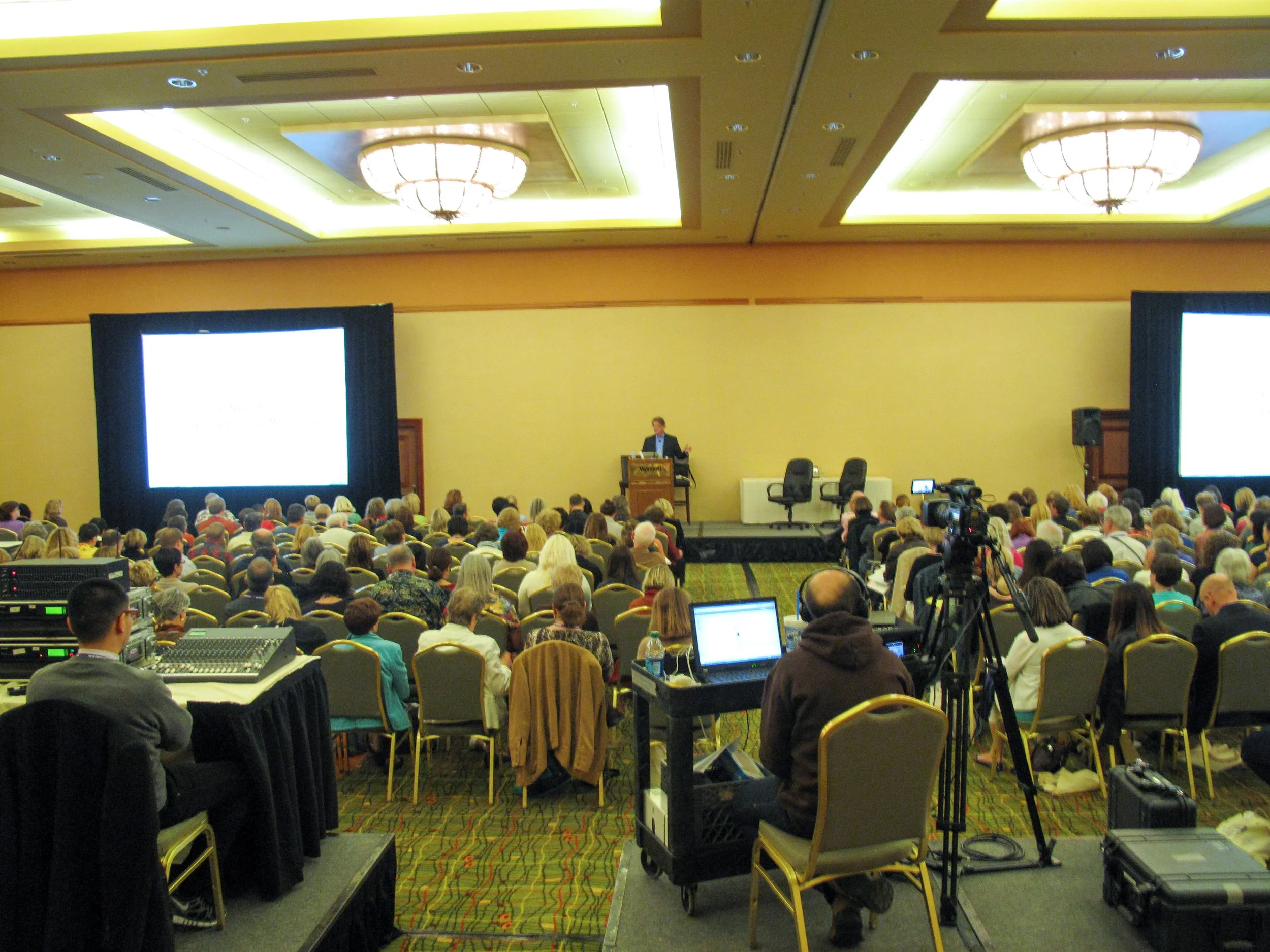
Terry Real delivers Keynote 13 at the 2013 Couples Conference.
Real frames this shift as both progress and crisis. Women, now economically independent, are no longer compelled to remain in unsatisfying relationships. They initiate the majority of divorces, not because marriage matters less…but because it matters more.
His central dilemma is striking:
Women want more intimacy than most men have been taught to deliver.
From this tension emerges his call for what he terms “relational empowerment.”
Rather than personal empowerment (“I was weak, now I’m strong…go screw yourself”), relational empowerment asks:
“What do you need from me to help you give me what I want?”
Real challenges therapists to move beyond gentle validation and into what he calls “fierce intimacy”…an intimacy that includes healthy aggression, truth-telling, and accountability.
🔥 Joining Through the Truth
One of the most powerful moments in the keynote is Real’s demonstration of what he calls “joining through the truth.”
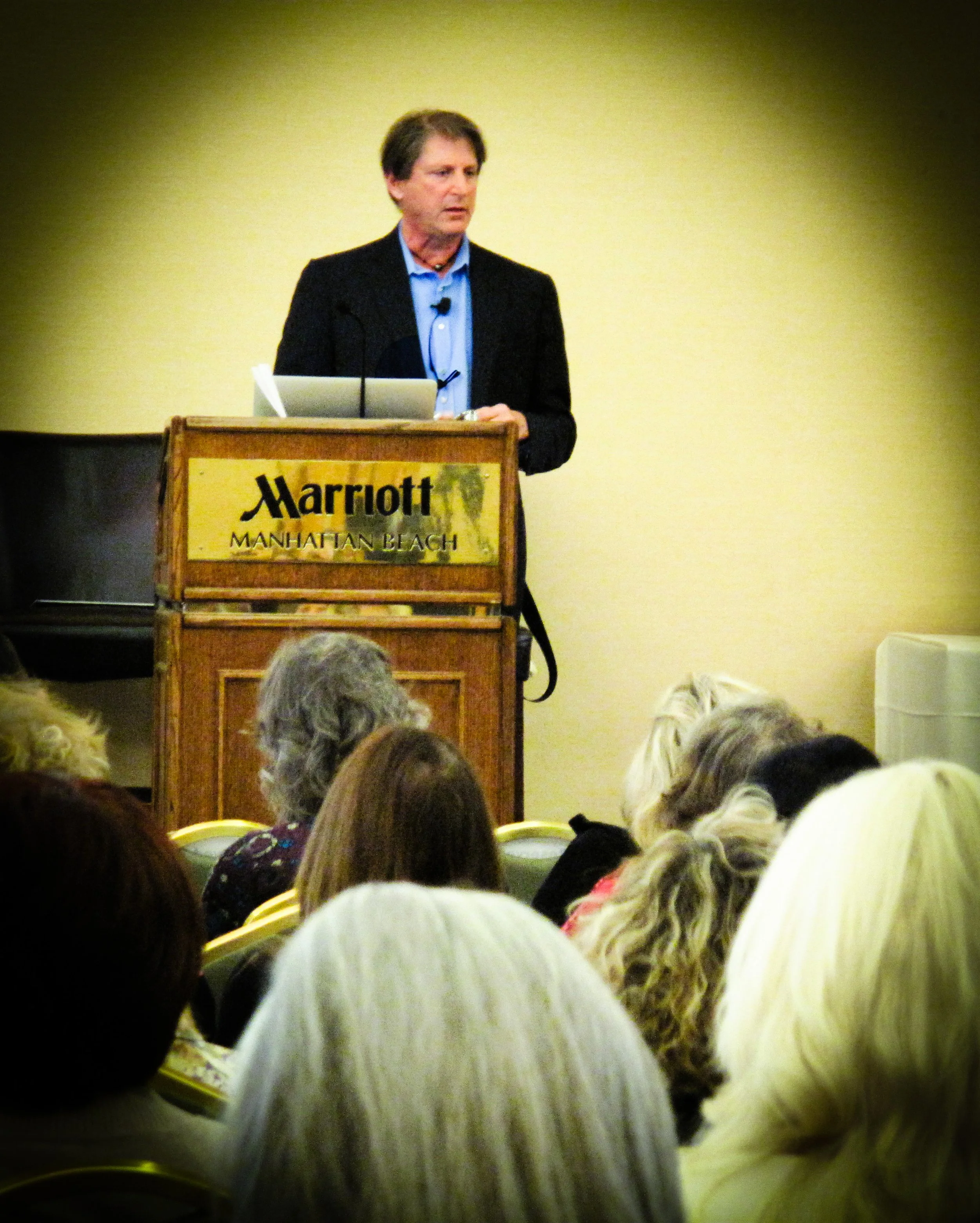
Terry Real delivers Keynote 13 at the 2013 Couples Conference.
Rather than slowly building alliance before confronting destructive behavior, Real forms the alliance by telling the truth. In a clinical clip, he directly tells a client, “You’re verbally abusive.”
But he does not leave the client in shame. Instead, he differentiates between the decent person and the indecent behavior, inviting the client into appropriate shame without humiliation.
Real describes it as forming an alliance with the client’s “functional adult” against their grandiosity. It is you-and-me versus the problem.
For clinicians steeped in the Ericksonian tradition, this moment may feel both bold and familiar. While Real’s tone is more direct than Erickson’s often indirect style, the underlying moves echo Ericksonian principles:
• Strategic utilization of what the client presents
• Reframing pathology as protective adaptation
• Separating identity from symptom
• Evoking latent strengths rather than imposing solutions
Even his multi-generational framing of destructive behaviors, like “Who did this to you? Who did you see do it?”, reflects systemic thinking that resonates strongly with the Foundation’s history.
💡 Shame, Grandiosity, and the Missing Half of Therapy
Real argues that psychotherapy has done an excellent job helping people rise from shame (the “one-down” position) but has largely neglected helping people come down from grandiosity (the “one-up” position).
He contends that both are distortions of authentic self-esteem, and that many men in particular present from grandiosity while concealing deep shame underneath.
His message to therapists is clear:
If we avoid confronting entitlement, contempt, or intimidation in the therapy room, we replicate the very dynamics partners struggle with at home.
🎥 Watch the Moment
In this keynote excerpt, Terry Real discusses “joining through the truth” with clients:
⏳ Why It Still Matters
Thirteen years later, “Love in the 21st Century” feels even more relevant. Conversations around gender roles, emotional labor, equality, and partnership continue to evolve. Couples arrive in therapist offices with historically unprecedented expectations: they want security and passion, independence and closeness, strength and tenderness.
Real’s keynote challenges us to embody courage in the therapy room. To speak truth with compassion. To help clients build relationships that are intimate, accountable, and alive.
Love in the 21st century may be more demanding than ever. But as Real suggests, it may also be more conscious, more chosen, and more transformative than at any time before.
🔗 This keynote is available in the Erickson Foundation Clinical Library: https://catalog.erickson-foundation.org/item/cc13-keynote-02-love-21st-century-terry-real-licsw-70303
You may also like …

A Matter of Choice - Not Fate
William and Carleen Glasser, authors of several books including Choice Theory, teach couples that relationships are a matter of choice not fate. They teach how to use the solving circle, help couples understand basic needs in a relationship, identify seven deadly habits, and show how to choose solutions over problems.

A Teaching Seminar on Love's Hidden Symmetry
For those interested in learning how to apply Bert Hellinger’s family constellations method to their own work with couples and families. From a workshop given in San Francisco in 1999, this set shows how the family constellation approach works across a broad spectrum of issues. Part of the Professional Reference Series.

Strategies for Therapists and Coaches
by Cloé Madanes
Type: Softcover
Caution: Don’t be deceived, this little book packs a big punch! Changing Relationships is a deep repository of practical insight that will inspire dozens of aha! moments. But Madanes’ observations are not simply impressive; she is also a wise and generous mentor, providing access to powerful strategies that can be put to immediate use by therapists and coaches.
Whether clients are trying to break free of relationship stalemates, turn down the volatility in communication, revitalize connection, create safe space for new possibility, or interrupt a seemingly intractable pattern, Changing Relationships will serve as an essential reference and a golden compass for the professionals from whom they seek guidance. Madanes isn’t much interested in “fixing” people, rather, her brilliance is in helping people to discover — or to recover — the pathways that will lead them to becoming what they want to be, both as individuals and in relationship.
From Tony Robbins: “One day a friend handed me a book by a woman named Cloe Madanes and baboom! I found myself reading it voraciously, underlining sentences on almost every page. Here was an approach that … honored the power of individual commitment and responsibility, and was also an action manual on navigating the paradoxes of interpersonal dynamics.”
Cloé Madanes: Changing Relationships: Strategies for Therapists and Coaches

A Teaching Seminar on Love's Hidden Symmetry
For those interested in learning how to apply Bert Hellinger’s family constellations method to their own work with couples and families. From a workshop given in San Francisco in 1999, this 3-volume set shows how the family constellation approach works across a broad spectrum of issues.
